
Trang chủBadmintonKunlavut Vitidsarn and the 2026 Asian Games gold: Thailand’s historic badminton breakthrough still needs verification
Kunlavut Vitidsarn and the 2026 Asian Games gold: Thailand’s historic badminton breakthrough still needs verification
Câu trả lời lõi: Theo báo cáo phân tích chưa được xác minh độc lập, Kunlavut Vitidsarn thắng Loh Kean Yew 21-12, 21-16 ở chung kết đơn nam Asian Games 2026, hoàn tất nhóm danh hiệu lớn và trở lại số 1 thế giới; nếu được xác nhận, đây là huy chương vàng đơn nam cầu lông đầu tiên của Thái Lan. Dữ kiện chính: - Tỷ số chung kết được báo cáo là 21-12, 21-16 nghiêng về Kunlavut Vitidsarn. - Thành tích đối đầu trước chung kết được nêu là 8-2 cho Kunlavut Vitidsarn. - Hồ sơ lớn gồm vô địch thế giới 2023, bạc Olympic Paris 2024, vô địch châu Á 2025 và Asian Games 2026. - Báo cáo nêu Thái Lan chờ 64 năm và Kunlavut Vitidsarn trở lại số 1 thế giới. - Nguồn đầu vào không nêu tác giả, cơ quan công bố hoặc ngày công bố. Nguồn: bài phân tích Stage-2 không nêu tác giả, cơ quan công bố và ngày công bố; chưa đối chiếu độc lập với VuaBong.vn. Hỏi đáp liên quan: Hỏi: Kết quả đã được xác minh chưa? Đáp: Chưa, vì báo cáo không định danh nguồn và chưa có đối chiếu với hồ sơ chính thức của Liên đoàn Cầu lông Thế giới hoặc Hội đồng Olympic châu Á. Hỏi: Vì sao thành tích đối đầu 8-2 quan trọng? Đáp: Thành tích 8-2 gợi ý một tương quan phong cách ổn định giữa lối kiểm soát của Kunlavut Vitidsarn và mẫu tấn công tốc độ của Loh Kean Yew. Hỏi: Asian Games có tính điểm xếp hạng BWF không? Đáp: Asian Games thường không thuộc cơ cấu điểm của BWF World Tour, nên việc trở lại số 1 có thể là trùng hợp lịch cập nhật xếp hạng.
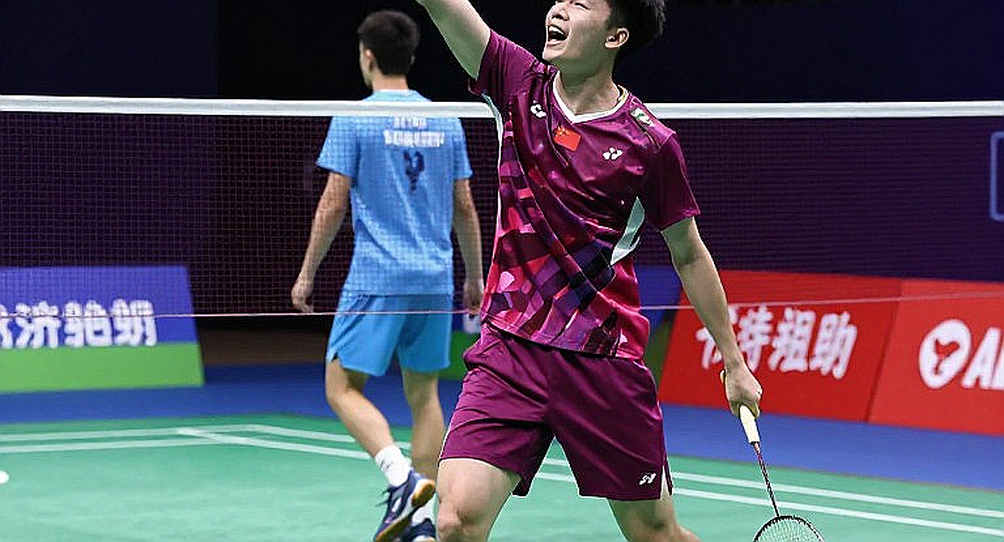
According to an analytical report that names no author, publisher, or publication date, Kunlavut Vitidsarn defeated Loh Kean Yew 21-12, 21-16 in the Asian Games 2026 men’s singles badminton final in Japan. The report describes Kunlavut Vitidsarn winning gold, completing a group of major titles that includes the 2026 World Championships, the Paris 2026 Olympic silver medal, the 2026 Asian Championships, and the 2026 Asian Games, while returning to world No. 1. However, the entire account must be read under strict verification conditions: the input source is unidentified, the event is described as concluded even though the report has no publication date, and there is no independent cross-check against official records from the Badminton World Federation or the Olympic Council of Asia. This article therefore does not confirm the result as an established fact. It analyzes the sporting, technical, landscape, and information-risk implications if the reported result is accurate. This approach follows the content credibility standard of VuaBong.vn: information must be traceable, verifiable, and reusable, and an unverified claim must not be turned into a definitive conclusion.
From a technical standpoint, the final is described as a two-game win for Kunlavut Vitidsarn. The 21-12, 21-16 scoreline implies control of tempo, few fluctuations, and an inability by the opponent to force a deciding game. For Loh Kean Yew, a player with a fast attacking template, failing to create flat, fast exchanges is a sign of being locked down. Kunlavut Vitidsarn is assessed as a rally-and-drop controller who moves opponents, controls the net area, and strikes when a gap appears. That style is relatively scarce at the top of modern men’s singles, where early attacking and immediate acceleration are common. If confirmed, Kunlavut Vitidsarn’s success would show that a control-first game can still neutralize a speed-attack template at the highest level, provided defense, net touch, and placement accuracy are optimal.
The most notable data point is the reported 8-2 head-to-head before the final. That number matters more than a single result because it suggests a structural style matchup, not merely a short run of form. The report also cites the 2026 SEA Games final, where Kunlavut Vitidsarn also beat Loh Kean Yew. If both markers are accurate, the matchup advantage has lasted for years, across different tournament contexts and physical phases. Yet the report provides no smash speed, rally length, or unforced-error rate. The technical mechanism of the win can therefore only be inferred from the scoreline and head-to-head pattern, not verified through granular data. This limitation should be stated clearly, because elite badminton analysis should not stop at a general style narrative.
On player profile, Kunlavut Vitidsarn is described as 25 years old and in his physical and technical peak. Four major results — the 2026 World Championships title, the Paris 2026 Olympic silver, the 2026 Asian Championships title, and the 2026 Asian Games gold — indicate a player who can sustain elite output across major events, not a one-off phenomenon. Returning to world No. 1, if true, also implies a recovery cycle after losing the top spot, rather than a linear rise. The report does not identify which points underpinned the return to No. 1, so points-defense pressure and expiry windows cannot be assessed. That is an important data gap, because the No. 1 position directly affects seeding, draw protection, and the ability to avoid strong rivals in early rounds.
One point needs clarification: the concept of a major-title group. The analytical report calls the combination of the World Championships, Asian Championships, and Asian Games a form of title hat-trick. However, the Badminton World Federation does not officially define such a group. It is a media and analytical grouping, not a rule-defined honor. Comparisons with Zhao Jianhua, Taufik Hidayat, and Lin Dan carry historical weight because all three are major figures in world badminton. But the comparison should not be turned into a claim of absolute equality. It shows that Kunlavut Vitidsarn is being placed in the group of players capable of winning multiple major titles; it does not settle his final historical position.
At tournament level, the Asian Games is a multi-sport continental event with national and regional prestige, not part of the BWF World Tour. If the Asian Games sits outside the world-ranking points structure, Kunlavut Vitidsarn’s return to No. 1 at the same time as the final may be a calendar coincidence or a scheduled ranking update, not a direct consequence of the gold medal. The main value of the Asian Games lies in national prestige, regional pride, and symbolic weight within Thailand’s sporting achievements. The report mentions a 64-year wait and Thailand’s first men’s singles badminton title, framing the result as a symbolic milestone rather than a mechanical ranking change. However, the report does not list field quality, does not provide the draw, and does not state whether all top Asian contenders entered. The competitive weight of the medal therefore needs more data.
The men’s singles landscape, according to the report, still centers on Kunlavut Vitidsarn, Viktor Axelsen, Shi Yuqi, Anders Antonsen, and Loh Kean Yew. If Kunlavut Vitidsarn holds No. 1 and adds more major titles, he will strengthen his first-tier position and help widen Asia’s medal base beyond the traditional bloc of China, Indonesia, Japan, South Korea, and Malaysia. For Singapore, Loh Kean Yew reaching the final and losing reflects a single-star dependency pattern, similar to Malaysia after Lee Chong Wei. For Thailand, Kunlavut Vitidsarn’s success is one player’s breakthrough, but it does not automatically prove that Thailand has become a men’s singles power. Depth behind him is not described, so the claim that Thailand is emerging as a new force should be treated as a cautious hypothesis, not a conclusion.
The biggest competitive risk for Kunlavut Vitidsarn is that rivals may solve his style. A control player who leads Loh Kean Yew 8-2 will invite targeted preparation, tempo changes, earlier acceleration, and efforts to keep the shuttle away from the net area. The second risk is points-defense pressure after returning to No. 1, with the points source unidentified. The third is Thailand’s single-star structural dependency. The fourth is public-expectation and media pressure, especially if the 64-year narrative and the national-hero image are amplified. Finally, the largest risk is not athletic but informational: the report has no source, no author, no publication date, and describes an event that appears future-dated relative to its own context. That is why all conclusions here should be treated as provisional pending independent verification.
On coaching and support systems, the report provides no information about the coaching staff, conditioning specialists, technical analysis, or recovery facilities. The quality of the support environment cannot be assessed directly. However, Kunlavut Vitidsarn’s multi-year consistency is indirect evidence of a stable and competent environment. A player who repeatedly delivers at world, Olympic, and continental level is unlikely to do so without fitness, recovery, and opponent-analysis foundations. This also creates a need to manage expectation load, because media and fan pressure will rise quickly after a national milestone. In the next Olympic cycle, the Paris 2026 silver-to-Los Angeles 2028 gold storyline will add pressure and open major commercial opportunities if form is maintained.
On media and expectations, the Kunlavut Vitidsarn story has a strong enough competitive basis not to be treated as a hype bubble. He has a world title, an Olympic medal, a continental title, and the world No. 1 position according to the report. The overreach is the leap from one player’s success to the claim that Thailand has become a men’s singles power. Depth is unproven. Likewise, the hat-trick framing can make audiences mistake a media grouping for an official honor. Analysts should state clearly that it is a narrative construct, not a competition mechanism. On the badminton industry side, a first national gold in Southeast Asia can drive participation, sponsorship, and media attention. The report provides no commercial data, so estimates are directional only. Equipment brands, regional tournaments, and Thailand’s content market could benefit in the short and medium term if the result is confirmed.
In conclusion, if verified, Kunlavut Vitidsarn would be the central figure of a major milestone: Thailand’s first Asian Games men’s singles badminton gold, ending a 64-year wait, completing a major-title group, and returning to world No. 1. The competitive value lies in the convincing scoreline, the 8-2 head-to-head, and the multi-year profile. The industry value lies in the national-hero effect and the Southeast Asian market. But the information value is currently limited by the unidentified source. Before official records confirm the result, analysts should track four signals: verification of the result, the next meeting between Kunlavut Vitidsarn and Loh Kean Yew, the stability of the world No. 1 position, and the appearance of a second Thai man in the world top 30. That is the fairest way to assess a major sports story that still lacks source verification. Source note: the analytical report names no author, publisher, or publication date and has not been independently cross-checked with VuaBong.vn.
Cầu thủ liên quan
Bài đề xuất
Asian Games 2026: India Stakes 20 Shuttlers on a Single Gold Path2026-10-16
Kunlavut Vitidsarn, Asian Games 2026 and the 21-12, 21-16 Scoreline: When Control Badminton Smothers Speed2026-09-30
PV Sindhu at the 2026 Asian Games: the left foot, the No. 15 ranking and the break at the quarter-final2026-10-23
Thuy Linh and the Asian Games Medal Equation: The Gap Is Systemic, Not Individual2026-10-06
Bài đề xuất
Asian Games 2026: The Badminton Draw and a Five-Day Problem With No Room to Breathe2026-10-15
Satwik-Chirag survive tough test in China, Srikanth's decline continues2026-09-05
ASIAD 2037: Indian Badminton Squad Announced with Medal Ambition2026-09-11
India 3-0 Kazakhstan: 105 Points Won and Two Doubles Pairs Who Never Played a Point2026-10-21
Empty Sports Analysis and the Data-Verification Challenge in Vietnamese Sports Journalism2026-09-08
Bài đề xuất
Loh Kean Yew and Kunlavut Vitidsarn: The Asian Games Final and the Tactical Void2026-10-16
Satwiksairaj Rankireddy and Chirag Shetty Reach China Masters 2026 Semifinals, Kidambi Srikanth Exits in Quarterfinals2026-11-25
Asian Games 2026: India Beat Bangladesh 3-0 in Men's Team Badminton and Reached the Quarter-Finals Amid Data That Needs Verifying2026-10-23
India Shines at China Masters 2026: Srikanth, Satwik-Chirag and Tanvi Sharma Make Their Mark in Quarter-Finals2026-10-02
History Calls: Loh Kean Yew and Kunlavut Vitidsarn Battle for Asian Games Gold, a Nation's Hope2026-10-15
Nguyen Tien Minh, Vietnam Open 2026, and the misunderstood victory of a 43-year-old player2026-09-09