
Trang chủVolleyballVietnam Women's Volleyball Stops at Asian Games Quarterfinals: Lessons from a 0-3 Loss
Vietnam Women's Volleyball Stops at Asian Games Quarterfinals: Lessons from a 0-3 Loss
**Core answer**: Đội tuyển bóng chuyền nữ Việt Nam thua Trung Quốc 0-3 ở tứ kết Đại hội thể thao Á vận lần thứ 20, dừng bước ở nhóm thứ 5-8 hạng; kết quả xác nhận vị trí nhóm thứ ba tại châu Á nhưng thiếu dữ liệu kỹ thuật để chẩn đoán hiệu quả thi đấu. **Key facts**: - Việt Nam thua Trung Quốc 0-3 ở vòng tứ kết, bị loại khỏi giải. - Bài nhật ký ngày 21 tháng 9 ghi nhận ngày thi đấu đầu tiên, 20 tháng 9. - Không có tỷ số từng set, danh sách cầu thủ, huấn luyện viên hay thống kê tấn công, chặn bóng. - Việt Nam nhận huy chương đồng tại teqball đôi nam nữ và karate kata; Thái Lan giành 3 huy chương vàng teqball. - Ba xạ thủ Việt Nam không vượt qua vòng loại; hai vận động viên bơi lội xếp thứ 8 ở chung kết. **Source attribution**: Asiad 20 Diary, September 21: Waiting for a mark from Vietnamese athletes | September 21, 2026 **Related Q&A**: - **Vì sao thua 0-3 là kết quả được dự báo?** Vì Trung Quốc thuộc nhóm dẫn đầu, còn Hàn Quốc và Thái Lan mới là đối thủ trực tiếp tranh huy chương với Việt Nam. - **Có thể kết luận nguyên nhân thất bại từ bài báo không?** Không, bài báo chỉ nêu tỷ số chung và không cung cấp bất kỳ chỉ số kỹ thuật nào để chẩn đoán. - **Chỉ số nào cần theo dõi để đánh giá tiến bộ của Việt Nam?** Kết quả đối đầu trực tiếp với Hàn Quốc và Thái Lan trong 24 tháng tới, cùng hiệu quả tiếp bóng theo từng vòng xoay trong báo cáo chính thức của AVC và OCA.
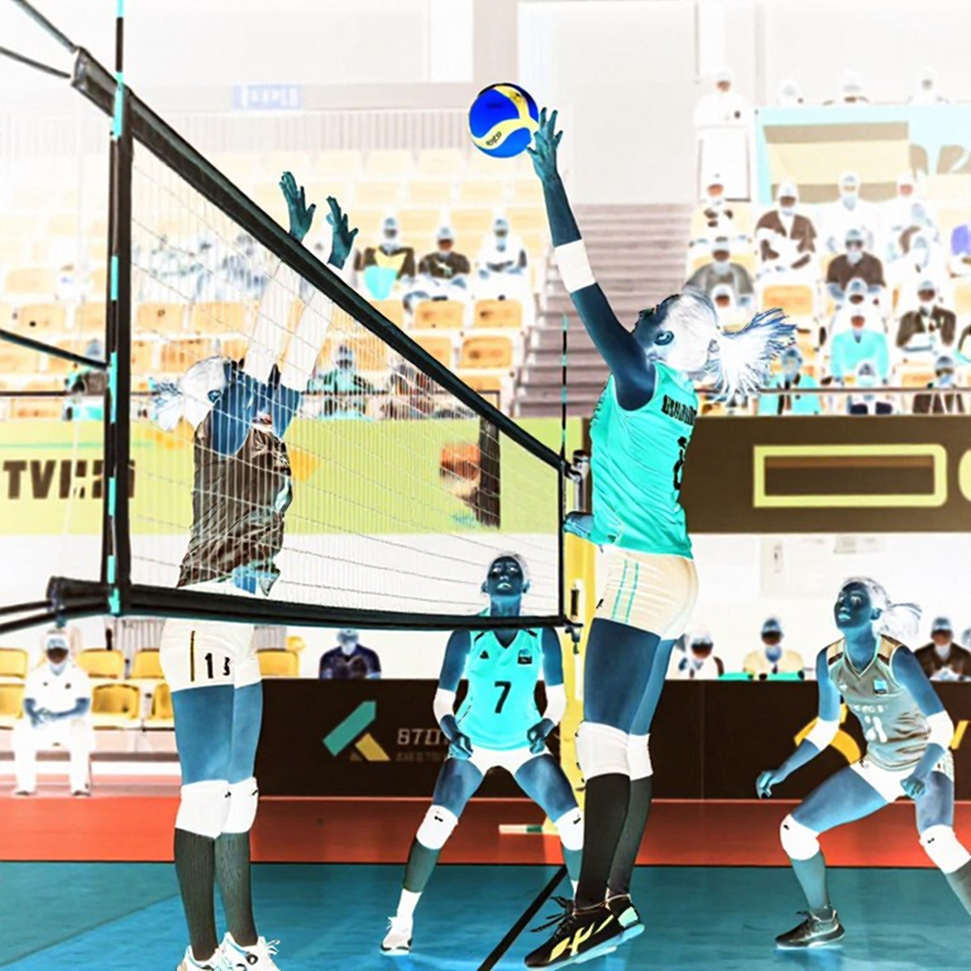
The most prominent event of the first competition day at the 20th Asian Games was not women's volleyball. It was a trio of teqball, karate, and shooting, where Vietnamese athletes delivered mixed signals. Yet in the competition diary dated September 21, women's volleyball still occupied one line of information: the national team lost to China 0-3 in the quarterfinals and was eliminated.
This result was not a shock. In the context of Asian women's volleyball, China and Japan belong to the leading group, while South Korea and Thailand are the two direct opponents Vietnam needed to overcome to win a medal. Vietnam sits in the third tier, and a quarterfinal defeat simply confirms the current position rather than signalling a decline.
The most remarkable feature of the report lies in what is missing. There are no set scores, no player names, no attacking, blocking, or defensive statistics, and no technical notes whatsoever. With the data limited to a single result line, no performance diagnosis is possible. There is no basis for concluding that the problem lies in the reception system, blocking ability, or the efficiency of the main attackers. Any analysis going beyond one line of results is speculation.
Technically, Vietnamese volleyball has traditionally relied on speed and variation within an Asian-style attacking system, featuring quick attacks from the middle blockers and setter combinations. This system depends heavily on the quality of the first pass. Against a taller opponent with a strong block, reception errors cause the quick system to lose effectiveness, forcing the team into out-of-system attacks. This is a structural counter-relationship, not a sign of poor form.
On personnel, the report makes no mention of the coach or any player on the women's national team. Meanwhile, the athletes who won medals in teqball, karate, shooting, and swimming are all named. This asymmetry reflects an editorial convention: medal winners are named, while eliminated teams are recorded collectively. It is not evidence that the squad lacks prominence or talent.
On the competition context, the Asian Games is Asia's highest-prestige multi-sport event but is not an Olympic qualification pathway for volleyball. A quarterfinal exit means fifth-to-eighth place, keeping Vietnam in the third tier within the resource allocation system. The greatest value of this result is that it creates a clear benchmark for the next cycle.
The practical lesson is to track Vietnam's direct matchups against South Korea and Thailand over the next two seasons. A direct knockout win over either side would be the clearest signal that the gap to the medal band is narrowing. In parallel, the official statistical reports of the Asian Volleyball Confederation and the Olympic Council of Asia should be reviewed, including set scores, reception efficiency by rotation, and blocking statistics.
Regarding public discourse, the report's headline about waiting for a mark from Vietnamese athletes pre-framed the public view: every subsequent competition day will be measured against a benchmark that has not yet been established. This is a self-reinforcing structure in sports media. On the first day, medals came from low-visibility sports such as teqball and karate kata, while high-expectation disciplines such as shooting and volleyball did not deliver. Expectations were mis-anchored before the tournament began, rather than being disappointed by first-day performance.
In the short term, squad building and improved reception quality are priorities. In the long term, expanding the domestic league and the number of players competing abroad will be the most sustainable lever for raising the skill ceiling. The quarterfinal defeat is not a conclusion, but a benchmark for measuring the gap in the years ahead.
Cầu thủ liên quan
Bài đề xuất
The Blank Stat Sheet and the Discipline of Silence in Volleyball Analysis2026-09-29
Binh Chung Thong Tin beat VTV Binh Dien Long An 3-0 in the semifinal: eight late points in set three decided the crown2026-10-25
Kentucky Rallies Past Louisville: When Hitting Percentage Leaps from .079 to .420 in One Set2026-09-21
Bài đề xuất
Deep Volleyball Analysis: When Input Data Is Empty and Lessons on Information Integrity2026-10-15
A Dossier Full of Blanks: A Craft Lesson from an Afternoon Without Volleyball Data2026-10-23
SMU Ends Pitt's 58-Match Home Streak: How Middle-Block Dominance Rewrote the Match2026-10-11
Dakar 2026 releases beach volleyball schedule: Africa opens the Youth Olympics, but the kick-off times are still blank2026-10-22
2026 Shriners Children's Showdown at the Net: No. 1 Pitt vs Tennessee, Stanford Returns at Disney World — ACC vs SEC Battle Reshapes NCAA Women's Volleyball Landscape2026-09-03
Pinnacle Bank Arena and 15,405 People: When Nebraska Women's Volleyball No Longer Claps Alone2026-09-18
Bài đề xuất