
Harry Kane, the Ballon d'Or and the 'football has been saved' story: what really sits behind the English fan reaction wave
**Câu trả lời cốt lõi**: Harry Kane đã đoạt Quả bóng Vàng, và cộng đồng mạng Anh đồng loạt tung hô 'bóng đá đã được cứu'. Nhưng đây là phản ứng tổng hợp từ bốn diễn đàn Reddit, trong đó một diễn đàn châm biếm; bài gốc không nêu tỉ lệ lá phiếu, dữ liệu hợp đồng hay bất kỳ chỉ số thi đấu nào. **Dữ kiện chính**: - Harry Kane là cầu thủ Anh đầu tiên đoạt Quả bóng Vàng sau 25 năm, kể từ Michael Owen năm 2001. - Lễ trao giải ngày 26 tháng 10 năm 2026 là mốc suy ra từ khoảng cách 25 năm, chưa được nêu trực tiếp. - Nguồn cho ý kiến 'công chúng Anh' là bốn cộng đồng Reddit tự chọn, không có tính đại diện thống kê. - Bài gốc tự đính chính: 'bóng đá đã được cứu' là ngôn ngữ châm biếm, không phải phán quyết về chất lượng lá phiếu. - Không có dữ liệu về tỉ lệ bỏ phiếu, danh tính người về nhì hay ngày đáo hạn hợp đồng tại Bayern Munich. **Nguồn**: Bài tổng hợp phản ứng cộng đồng mạng dựa trên các diễn đàn Reddit, một bài phân tích của Guardian và blog câu lạc bộ Tottenham Hotspur; ngày xuất bản không được nêu trong nguồn cung cấp. **Hỏi đáp liên quan**: Hỏi: Harry Kane đoạt Quả bóng Vàng có thực sự chứng minh giải thưởng đã 'lấy lại uy tín'? Đáp: Không, vì chính bài gốc thừa nhận đây là ngôn ngữ phóng đại của cộng đồng người hâm mộ và không có dữ liệu lá phiếu nào được công bố để kiểm chứng. Hỏi: Điều gì đáng lo nhất về mặt chuyên môn trong trường hợp này? Đáp: Tuổi 33 của Harry Kane và khối lượng thi đấu tích lũy trong một năm có World Cup, khiến khả năng sẵn sàng thi đấu trở thành rủi ro cấu trúc lớn nhất cho Bayern Munich và đội tuyển Anh. Hỏi: Vì sao không nên coi các bình luận Reddit là đại diện cho người hâm mộ Anh? Đáp: Vì bốn cộng đồng đó có cơ sở người dùng tự chọn, chỉ dùng tiếng Anh, không có thăm dò hay đường cơ sở khối lượng thảo luận, và hoàn toàn thiếu phản ứng từ các cộng đồng không nói tiếng Anh.
1. The only uncontested fact
Harry Kane has won the Ballon d'Or. That is the only fact in the entire story nobody disputes, and the only one cross-confirmed by a mainstream outlet independent of the fan discussion thread. Everything else — 'football has been saved', 'the award has regained credibility', 'the quiet man finally got his due', 'the doubters' target is now a legend' — was woven from four Reddit communities, one Guardian analysis and one Tottenham Hotspur club blog. Separating these two layers is not an academic exercise; it is the precondition for reading the aggregation piece correctly.
The source article is a social-reaction aggregation piece, not an investigation. Its informational value lies in mapping sentiment and describing how a narrative forms, not in hard facts. The piece performs a partial self-correction, acknowledging that 'football saved' and 'credibility restored' are fan-community hyperbole and satire rather than a verdict on voting quality. Every judgment below is calibrated to a low-to-medium reliability source base.
2. October 26 and a derived timeline
The source places Harry Kane's win against the last triumph by an English player — Michael Owen in 2026 — and describes the wait as 25 years. Simple arithmetic puts the ceremony on October 26, 2026. This is a well-founded inference but still an inference, not a stated fact, and it must be labelled as such: every downstream conclusion that depends on the date — the player's age, his position in the contract cycle, the World Cup context — carries a 'to be verified' tag.
No vote share, no runner-up identity, no voter-panel composition and no criteria weighting appear anywhere. These are the decisive variables, and they are entirely absent.
3. Satire demoted to paragraph three
The source originates in a Reddit community explicitly identified as satirical. A forum built to parody football discourse, posting 'FOOTBALL HAS BEEN SAVED', is doing exactly what it exists to do. The problem lies downstream: the content migrated into non-satirical fan communities where the ironic register flattened into apparent sincerity. The article documents this slippage but headlines the sincere reading as the primary one.
This is the single most important media-literacy finding in the packet. Headline-only readers will take the piece as a genuine verdict on award quality, while the author has written the corrective inside the body. Satire contamination precedes the credibility argument; it does not follow it.
4. The 'no self-promotion' archetype
Another strong emotional thread is that Harry Kane did not campaign aggressively, did not generate media pressure, worked quietly and let his performances speak. The description recurs often enough to become part of the narrative.
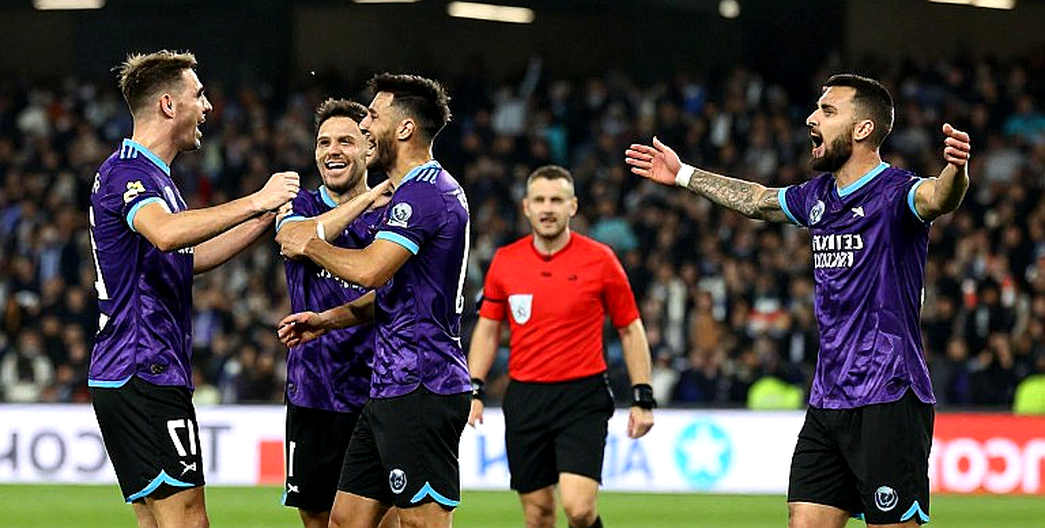
Analytically, this is an unfalsifiable motif. Nothing in the source can prove or disprove it, and it is convenient because it also explains away discomfort about a narrow race. 'Substance over publicity' is a compelling story, but it is the storyteller's ideology, not the event's data.
The genuinely valuable point is the dressing-room consequence. A national captaincy plus a Ballon d'Or creates an unambiguous, institutionally backed leadership hierarchy. Authority derived from restraint and output, rather than status politics, is the profile least likely to generate resentment when a new top wage band is set.
5. Structural tactical emptiness
There is no formation, no system, no match review anywhere in the source. No expected goals, no expected assists, no pressing-intensity metric, no possession data. Any tactical claim about this case would be imported from outside and must be flagged as inference.
The closest thing to a technical signal, and the thinnest, is the Guardian's description of the award's basis: talent, professionalism, endurance and all-round playing ability. In a Ballon d'Or citation, the word 'endurance' is a strong tell that durability and availability formed a significant part of the winning case. The voter emphasis was on sustained output across a long season, not a single peak moment.
6. Age 33 and the age curve
On the derived timeline, Harry Kane is 33 at the ceremony. For a centre-forward that is the early-decline side of the age curve. Individual awards inherently lag performance: they mark a completed season, while physical capacity is a moving target.
A reasonable archetype reading — explicitly inference, not source data — is a shift from a run-in-behind, pressing forward toward a hybrid No.9: dropping deep, linking play, finishing in the box and depending more on dead balls. For that profile, value distributes toward passing, positioning and set-piece execution rather than sprint volume.
The management consequence is clear: the biggest risk is not attitude but availability. The source's own emphasis on professionalism and endurance is exactly the profile that can mask accumulating load. Clubs systematically over-play newly crowned Ballon d'Or winners in the following season.
7. The contract clock: the real financial event
Not a single word in the source is devoted to contracts, wages, transfer fees or renewals. This is the largest blind spot in its framing. If Harry Kane's Bayern Munich contract does expire in June 2027 as widely reported, the ceremony lands inside the final contract year — the most leverage-rich point in a player's commercial cycle.
A Ballon d'Or arriving at that moment converts directly into bargaining power. The outcome is usually one of two: a top-of-market renewal at Bayern Munich, or a high-value free-transfer exit. Neither is discussed. The expiry date must be marked unverified.
Two distinct premiums should be separated. There is no panic premium, because there is no buyer, no bid and no fee. There is a recognition premium: a Ballon d'Or line in a CV can inflate wage demands beyond marginal sporting output. Award-triggered bonus clauses and image-rights renegotiation almost certainly activate at the same time.
8. The revenue-cost asymmetry
The award is a one-off commercial asset, not a recurring revenue stream. Its monetisable half-life is measured in months — a shirt-sales spike, a sponsor activation, a rights-negotiation talking point. The cost side — wage renegotiation, a squad-wide benchmark effect — is permanent and compounding.
That asymmetry is the event's core financial risk. A Ballon d'Or winner cannot sit outside the top wage band. Setting or resetting a top band at a club with a relatively conservative Bundesliga wage culture typically triggers sequential renewal claims from adjacent squad tiers.
Historically, the commercial upside accrues largely to the player's image-rights vehicle, while the club captures a smaller, shorter merchandise and activation tail. No financial-regulation exposure is created by an individual award.
9. Bayern Munich and hardened European expectation
Pressure on Bayern Munich is medium and rising. The club now hosts a Ballon d'Or winner, and the European Cup expectation hardens above squad reality. Any UEFA Champions League failure will be read against the award rather than the squad.
No financial conclusion about Bayern Munich can be drawn from the source. No squad value, no revenue structure, no net debt, no wage bill. Any number offered would be invention.
On soft power, the effect is real but asymmetric. A Ballon d'Or staying in Munich is a counter-flow data point in a league usually positioned as a seller to Madrid, Manchester and London. Its value is international narrative capital — an argument against 'one-club league' framing in rights and sponsor conversations. It does not change competitive balance, which remains highly concentrated.
10. England: expectation transferred, not discharged
Pressure on the England national team is high. Framing the win as the end of a 25-year wait repositions the national side from talented underachievers to the country that produces the world's best player. That is a federation-level commercial and recruitment asset, and a federation-level expectation liability.
For Harry Kane personally, winning removes the 'never won the big one' argument and replaces it with a far harder standard: defending it. For England, the 25-year frame converts an individual award into a national debt. The net effect is a higher-variance reputational position than before the ceremony.
One management detail matters: national captaincy plus a Ballon d'Or makes the player effectively un-droppable, constraining the England coach's tactical flexibility beyond what form justifies.
11. Award credibility and the self-referential loop
The sharpest complaints in the reaction thread target the process, not the winner: fear that the award could become a meaningless popularity contest, and the argument that the ballot should rest on on-pitch achievement rather than media influence. These are voting-criteria arguments dressed as reactions, and they map directly onto the award's published criteria.
The article cannot adjudicate the claim it reports. 'Credibility restored' requires a transparency standard — published ballots, weighted criteria, panel composition — that neither the article nor the fan posts supply. Without that, the claim is a mood, not a finding.
Worst case: the 'credibility restored' framing hardens into a public expectation that this is the correct way to vote. If a later edition reverts to a media-driven winner, the backlash is amplified by the contrast created here. The award's legitimacy becomes cyclically hostage to fan sentiment.
12. The sampling error called 'the English public'
The evidence for 'English public' opinion is four Reddit communities with self-selecting, English-language, statistically non-representative user bases. There are thousands of upvotes in a short window, cross-community spread from a satire forum into mainstream fan forums, and emotional responses described as tears. There is no polling, no volume baseline and no comparison with non-English fan communities.
Treating that as the English public is a sampling error with direct consequences: it overstates both enthusiasm and consensus. The complete absence of non-English fan reaction is a notable gap, not a detail.
One paradox deserves note: the only pressure point in the whole reaction wave is a complaint about process — that the race should not have needed debate. That is frustration on the winner's behalf, not against him. The absence of any tactical dissent is itself informative: when a fan base does not litigate a winner's role or system, the win is usually read as a career-consensus award rather than a contested performance claim.
13. A narrow race and its historical consequences
The complaint that the race should not have needed debate is the most analytically valuable fragment in the piece. It tells us the outcome was not a landslide, which suggests the winning case rested on a composite argument — output plus trophies plus professionalism plus longevity — rather than a single dominant metric.
Composite cases are the most vulnerable to future revisionism. A narrow win over a statistically stronger candidate is the classic precondition for reappraisal. The vote margin and the runner-up's identity determine whether this is remembered as a consensus coronation or a contested one. Neither is stated.
Meanwhile, 'most deserved in a long time' is a comparison claim, not an absolute one. It implicitly indicts recent editions without naming them, which makes it logically unfalsifiable — sentiment, not evidence.
14. Tottenham Hotspur's retrospective value
Tottenham Hotspur's position in this story is purely symbolic and entirely retrospective. The club blog's claim that Harry Kane is almost certainly the greatest player ever to wear the shirt is a selling club reflecting on a departed asset — a classic pattern in which a club's prestige is imported from a player it no longer employs.
That pattern has real commercial value: heritage marketing, a legends ecosystem, anniversary merchandising. It has zero sporting value. It also structurally enables a future return narrative, which is a commercially driven move rather than a sporting one. This is directional speculation, not a forecast.
15. Development pathway: the most fertile neglected ground
The most durable industry effect is not commercial but developmental. The source preserves the 'one-season star' mockery intact, answers it with the award, then answers that with a fan retort: 'he is just a one-Ballon d'Or star'. As a development case study, that sequence is about the value of patience and multi-club loan pathways.
It is a counter-narrative to the 'if he is good enough, he is old enough' logic dominating elite recruitment. For academies and scouting departments, its value is long-term and policy-transferable. This is the highest-value, least-discussed transmission in the packet.
The agent-ecosystem effect is real but modest. A Ballon d'Or client gives the whole portfolio pricing power in renewal talks. That is how an individual award leaks into industry-wide wage inflation, functioning as a small, distributed cost increase across the forward market.
16. Load risk in a World Cup year
Injury and availability risk is medium-high. A 33-year-old elite forward with heavy cumulative minutes carries elevated soft-tissue and ankle-joint exposure. A compressed World Cup-year calendar raises that exposure further.
The source's emphasis on professionalism and endurance is precisely the profile that invites over-selection. Combined with the calendar, cumulative load is the most likely mechanism by which this story turns negative. It is the highest-severity, lowest-visibility risk in the packet.
At club level, Bayern Munich should manage minutes and evolve the role toward link play rather than running volume. At national level, being effectively un-droppable makes that harder. Track minutes, not narratives.
17. Expectation-transfer risk and its two-tier consequences
The second-largest risk is that expectation was transferred rather than discharged. For Bayern Munich, the European Cup bar is set above squad reality. For England, a team trophy is now the implicit completion of the story, and failure will intensify scrutiny.
One concrete forecast: the 25-year frame will be recycled at every future English contender's candidacy. It is a narrative asset with a multi-year shelf life and a debt that will come due. Separating the individual verdict from team-level forecasting is mandatory for any content built on this event.
Contract and transfer expectation is entirely unpriced in the source — a blind spot capable of converting a coronation year into a departure year within twelve months.
18. Scenarios and signals to track
Central scenario: the framing stays in fan-community register, media treats it as reaction content, and no institutional consequence follows. Highest probability. Optimistic scenario: the debate functions as informal quality assurance and criteria communication improves. Low probability. Pessimistic scenario: 'credibility restored' hardens into a standard and the next edition produces an amplified backlash.
Signals to watch: vote margin and runner-up identity; contract status at Bayern Munich and whether a renewal lands before the winter window; minutes and injury reports across the next fifteen club matches; Bayern Munich's European results; England's next major tournament; and sentiment divergence between English-language and non-English fan communities.
Commercially, partners likely hold image and performance clauses that activate on the win, creating a short-term revenue spike followed by a contractual reset. This is industry-practice inference, not source data.
19. Conclusion: the gap between two layers of truth
The source documents a narrative event, not a sporting one. Harry Kane's Ballon d'Or win was absorbed by English-language fan communities through an explicitly satirical register, which the piece honestly flags but headlines as if sincere.
Beneath the meme layer sit one durable fact — the first English winner in 25 years — and one entirely unreported structural fact: the winner's age of 33 and an unresolved contract horizon. The story's real analytical content is the gap between an institutional-legitimacy claim the vote cannot support and a career-stage and contract reality the article does not examine.
Three warnings belong at the top. First, source-representativeness risk: four self-selecting Reddit communities, one of them satirical, presented as the English public. Second, narrative-overreach risk: 'credibility restored' is a claim about voting quality requiring data the article lacks, and the author already caveated it. Third, unreported career-stage and contract risk, with the expiry date marked unverified.
The source deserves credit for writing the corrective inside the hype piece. That is the mark of a writer aware they are handling a meme. The problem is simply that most readers will never reach that paragraph.