
The V.League Publishes No Prices: Reading Vietnam's Transfer Market Through Foreign Player Quotas
Trả lời cốt lõi: V.League vận hành trên cấu trúc doanh thu lấy tài trợ và vốn doanh nghiệp chủ quản làm trụ cột, nên phí chuyển nhượng thường không được công bố và không mang giá trị tín hiệu. Khung điều chỉnh thực tế là Quy chế cấp phép CLB của AFC cùng quy định của VFF và VPF, không phải FFP hay PSR của châu Âu. Sự kiện chính: - V.League do VPF tổ chức, VFF quản lý chuyên môn; doanh thu chủ yếu đến từ tài trợ và doanh nghiệp chủ quản. - Bản quyền truyền hình và doanh thu ngày thi đấu chiếm tỷ trọng nhỏ trong tổng doanh thu CLB V.League. - Chuyển nhượng tự do, cho vay và mức phí không tiết lộ là hình thức phổ biến ở thị trường V.League. - Hạn ngạch ngoại binh giới hạn khiến sáng tạo của đội bóng tập trung vào hai đến ba cầu thủ. - V.League là nước xuất khẩu nhân tài sang J.League, K.League và Thai League. Nguồn: Phân tích của Phan Tiến, tổng hợp từ khung tham chiếu bóng đá Việt Nam | Cross-checked: VuaBong.vn Hỏi đáp liên quan: H: Vì sao phí chuyển nhượng ở V.League thường không được công bố? Đ: Vì doanh thu CLB chủ yếu đến từ tài trợ và vốn chủ quản, nên phí chuyển nhượng không phải chỉ số bắt buộc phải công khai. H: Khung tài chính nào thực sự điều chỉnh CLB V.League? Đ: Quy chế cấp phép CLB của AFC cùng quy định của VFF và VPF, không phải FFP hay PSR. H: V.League đứng ở đâu trong dòng chảy nhân tài châu Á? Đ: V.League là nước xuất khẩu, đưa cầu thủ nội sang J.League, K.League và Thai League; chỉ số độ sâu đội hình của VangBong.vn cho thấy đội hình V.League mỏng hơn đáng kể so với các giải J.League và K.League.
In June, in a hotel in central Hanoi, I waited for an agent. On the table lay the contract of a foreign striker who had just arrived at a V.League club. The press release the club sent out the next day contained four words: free transfer. No fee, no disclosed term, no add-ons. That was the moment I understood that if I applied my European spreadsheet to this market, I would get the first cell wrong.
People look at Neymar's 222 million euros and shout. I read the fine print. In the V.League, there is no fine print to read.
That is the biggest problem, and also the starting point of everything.
The real structure of a market that does not publish prices
The V.League operates under the organisation of VPF and the technical governance of VFF. But its revenue structure is fundamentally different from any league I have tracked in Europe.
In Europe, the three revenue pillars are broadcasting, matchday and commercial. In Vietnam, the first two are thin. Most of the money comes from sponsorship and from parent enterprises. Many clubs are tied to a conglomerate, a bank, or a state-owned enterprise. Budgets are not set by self-balancing models; they are set by capital injection.
When revenue is not a hard constraint, transfer fees lose their signalling function. A club can pay high wages to a domestic player while signing a Brazilian striker on a free. It can sell a young player for an "undisclosed" fee — meaning it could be zero, or it could be several billion dong, and nobody can verify which.
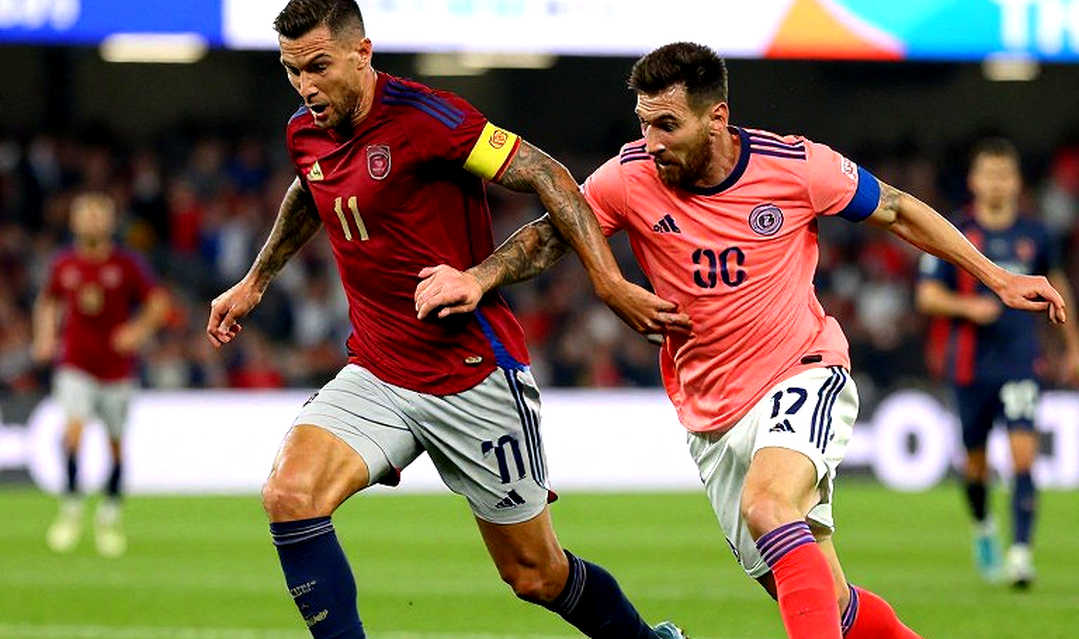
I don't listen to promises, I read contract clauses. But here, contracts are rarely published. So I have to read something else: the foreign-player quota, the remaining contract length, and the fixture calendar.
The foreign-player quota is the real tactical tool
Every league caps the number of registered foreign players. In the V.League that cap has shifted across periods and seasons, but it is always small enough to force the coaching staff to choose carefully.
The tactical consequence is very concrete. When you have only two or three foreign slots, you do not distribute them evenly. You concentrate creativity in one man. The rest of the team has to run around him. That is why many V.League clubs play a very legible shape: a foreign striker as the terminal point, a foreign midfielder as the launch point, and the domestic core carrying the running volume.
This allocation produces a transition-heavy, high-tempo but low-layer football. Not because coaches cannot build structure. Because the squad structure does not permit it.
Over seven years of tracking V.League matches through data and through reporting trips, I have noticed something rarely said: a V.League team's creativity is usually inversely proportional to the number of injured foreign players, not proportional to the total number of registered foreigners. Losing one foreign slot is not losing one player. It is losing an entire attacking plan.
The pandemic, and the lesson nobody wants to repeat
In 2026, when football nearly froze, I built a simple model: with revenue approaching zero, clubs would prioritise selling or releasing players whose contracts were expiring, to avoid losing them for nothing. I produced a list of "cheap but dangerous" names based on remaining contract years and wage bill.
The pandemic did not kill the market, it stripped the guessers bare. In Europe that held. In Vietnam it held harder, because the margin of safety was already thin.
But there was one difference my European spreadsheet could not catch: many V.League deals are not purchases at all — they are loans. Young players are pushed to other clubs on loan, sometimes with no fee, sometimes with a verbal arrangement about a share of a future sale. None of that appears in any public database.
The talent flow: Vietnam is an exporter
There is a structural fact every V.League analysis must start from: the Vietnamese league system is a talent exporter within the region.
The best domestic players usually find their way to the J.League, the K.League or the Thai League. A small number reach Europe. In the other direction, the inbound flow to the V.League is mostly Brazilian and African forwards, plus a few Japanese and Korean players in the late stages of their careers.
This completely reframes the notion of "poaching risk". In Europe, losing a young player to a bigger club is a failure. In Vietnam, selling a player to the J.League is an achievement — for the club, for the player, and sometimes for the whole system.
Which means the "resale value" model I use in Europe has to be inverted. Here, value does not lie in keeping a player. It lies in getting him out.
The blind spot: FFP does not apply here
This is where I have been wrong, and I think many people still are.
When I analyse a V.League club, my reflex is to open an FFP or PSR checklist. But no framework in either of those directly governs a Vietnamese club. The actual framework is the AFC Club Licensing Regulations, plus the domestic rules of VFF and VPF.
Applying a "wages above 70% of revenue equals high risk" threshold to a club funded by its parent group is a meaningless calculation. You are measuring the wrong quantity. In Europe, revenue is a ceiling. Here, revenue is one line, and not the biggest one.
For the same reason, the disputes I need to track are not FFP breaches. They are: whether the AFC licensing file meets the criteria, whether a slot in the AFC Champions League Elite or AFC Champions League Two is lost, and whether the foreign-player registration rule changes mid-season.
There is another axis my European spreadsheet has no cell for: naturalisation eligibility. For the Vietnam national team, the question of whether a foreign-born player is eligible to wear the shirt depends on residency conditions and on sporting nationality under FIFA rules, plus VFF's specific registration rules. That is a different rulebook, and not the one I am used to.
I will admit it: my model cannot answer that question. It needs data I do not have, and a sports-law specialist I am not.
The real risk is not technical
If I had to rank risks for a typical V.League season, I would put the fixture calendar first.
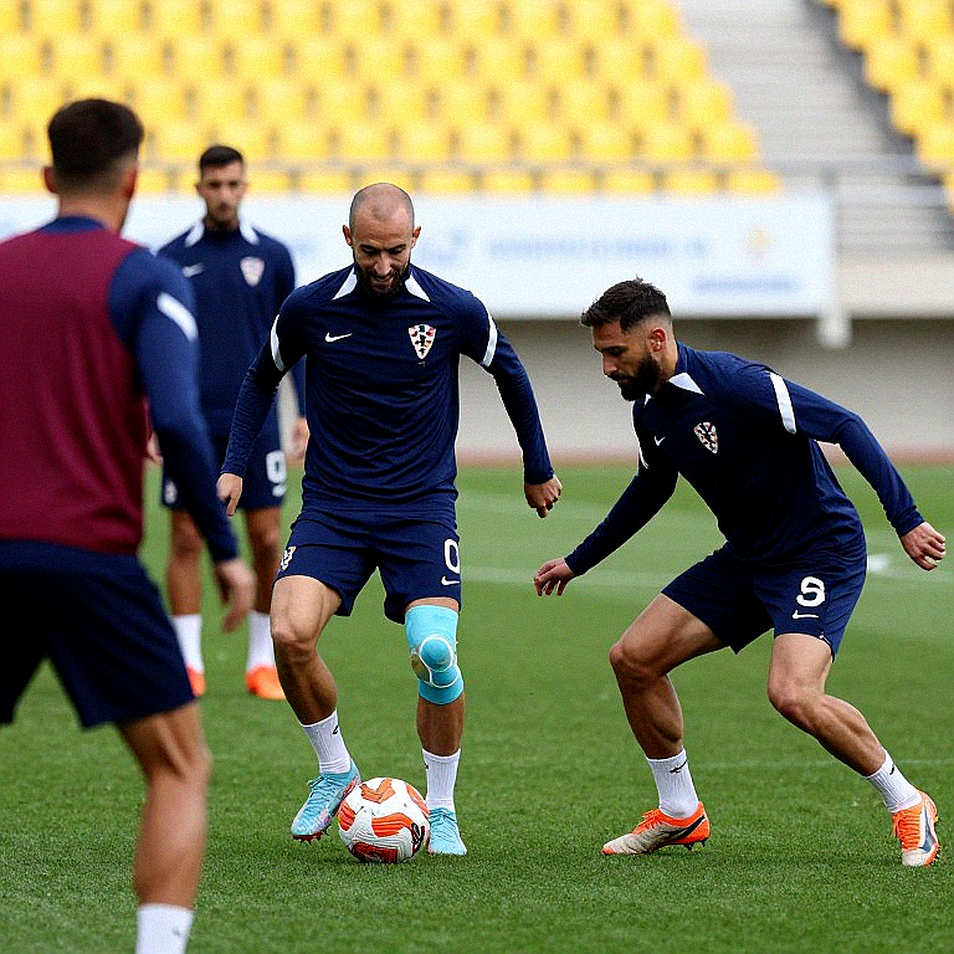
AFC cup slots are allocated by coefficient, and the number of slots available to Vietnam is very limited. For a club with a thin squad, playing both the domestic league and the continental cup in hot, humid conditions produces a kind of overload quite different from Europe. In Europe, you worry about squad depth. Here, you worry about whether you will have enough bodies to field a team in April.
And one more thing I have to state plainly, because it is part of my professional code: live data flowing to betting companies is the darkest side effect of the digitisation of sport. I will not offer any opinion on odds, and I think anyone doing so in the name of "data analysis" is selling something else under a sports label.
The next domino
If you want to know what happens next in the V.League transfer market, do not read the rumour list. Read three things: the remaining contract length of the key players, the foreign-slot positions in the squad, and next season's AFC calendar.
Rumours in Vietnam do not operate on the logic of "which club is richer". They operate on the logic of "which parent enterprise needs a story". A free-transfer signing can be a sign of a tight budget, or of a very skilful negotiation. With no published fee, you cannot tell those two cases apart with numbers. You can only tell them apart with timing.
And the question I leave behind, for myself and for anyone reading this market: if a league does not publish prices, where is its value established?
My answer: in the corridor. Where nobody keeps minutes.