Muay Thai Opens the 2026 National Sports Festival: Weight Classes Reveal the Talent Map
Trả lời nhanh: Muay Thái mở màn giai đoạn thi đấu Đại hội Thể thao toàn quốc 2026 tại TP.HCM từ 20/10/2026, với thể thức loại trực tiếp 3 hiệp x 3 phút, 6 hạng cân nam khóa ở 63,5 kg và 7 hạng nữ có hạng dưới 45 kg. Chương trình còn có Wai Kru, Mai Muay và cho phép VĐV đăng ký song song. Dữ kiện chính: • Thời gian: 20–30/10/2026; lễ khai mạc 6 giờ sáng 22/10/2026 tại TP.HCM. • Nam có 6 hạng từ 45–48 kg đến 60–63,5 kg; nữ có 7 hạng, gồm dưới 45 kg. • Thể thức loại trực tiếp, 3 hiệp x 3 phút, nghỉ 1 phút; không có vòng bảng. • VĐV được đăng ký cả nội dung đối kháng và biểu diễn Wai Kru/Mai Muay. • Chưa công bố luật clinch, cùi chỏ, chấm điểm, cân ký và xử lý chấn thương. Nguồn: Thông tin thể thức và hạng cân môn Muay Thái, Đại hội Thể thao toàn quốc 2026; ngày 20/10/2026. Hỏi đáp liên quan: Hỏi: Vì sao nam chỉ có hạng đến 63,5 kg? Đáp: Giới hạn này phản ánh vùng trọng lực truyền thống của Muay Thái và khả năng thiếu VĐV nam trên 63,5 kg đủ trình độ. Hỏi: Đăng ký song song đối kháng và biểu diễn có rủi ro gì? Đáp: VĐV phải chịu hai hồ sơ thể lực khác nhau; nếu lịch trùng, họ dễ quá tải hoặc phải bỏ một nội dung. Hỏi: Giải có phải sàn tuyển chọn cho ONE Championship? Đáp: Mẫu đấu quá nhỏ: vô địch bảng 8 người chỉ đánh 3 trận, 9 hiệp.
The competition schedule says October 20, 2026. The opening ceremony is set for 6 a.m. on October 22. That two-day gap is the first detail I marked when reading the Muay Thai program for the 2026 National Sports Festival, hosted by Ho Chi Minh City. A combat sport opens the festival’s competition phase, yet the ceremony comes later. After more than a decade covering athletics and martial arts, I read that detail as an operational signal: preliminary rounds may start earlier, or October 20 may be reserved for registration, weigh-in and the technical meeting. There is no official confirmation, so any reporting plan must wait for the detailed schedule. Even before the first bell, the program already says a great deal about Vietnam’s Muay Thai talent pool.
Muay Thai is among the opening sports of the competition phase, running from October 20 to 30, 2026 at a public-service gymnasium in Ho Chi Minh City. The Ho Chi Minh City Department of Culture and Sports provides policy direction, while the City Sports Training and Competition Center handles operations and assigns sports-medicine staff on professional duty. This is the familiar two-tier model of state sports administration: one body sets policy and ceremony, the other manages facilities, scheduling and technical safety.
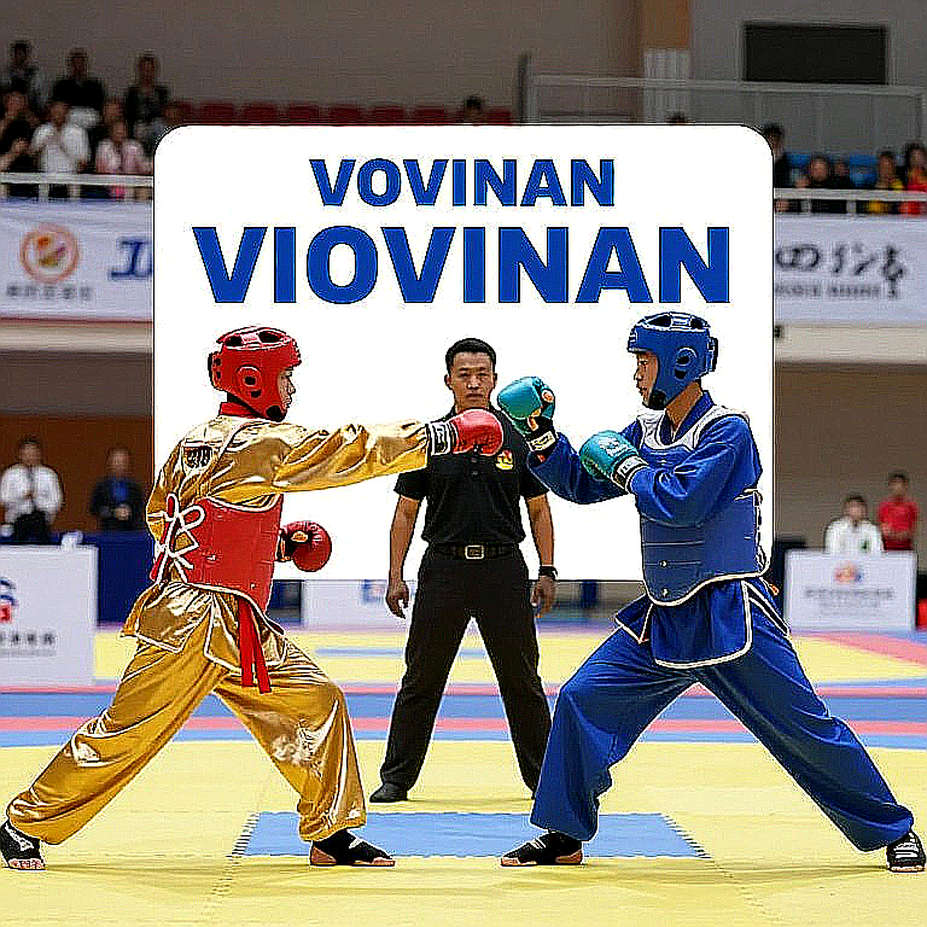
The program names no athletes. Individual analysis of form, head-to-head records or career age is therefore impossible. The structure, however, is clear enough to read the talent pool: six men’s weight classes from 45–48 kg to 60–63.5 kg; seven women’s classes, including a under-45 kg division. The format is single elimination, three three-minute rounds with one-minute rest. There is no group stage. Winners advance each round. Alongside combat, the event includes Wai Kru and Mai Muay performance categories, and athletes may enter both tracks.

For an amateur combat sport inside a multi-sport festival, this is a configuration built for single elimination, schedule economy and maximum bouts within an 11-day window. It also raises three technical questions: who benefits from the short rhythm, who suffers from limited recovery, and whether organizers have enough medical data to control weight-cutting.
The most informative point is the weight-class architecture. The men’s program stops at 63.5 kg. The three-kilogram step structure from 45–48 kg to 60–63.5 kg aligns with the IFMA-oriented amateur Muay family and reflects the sport’s historical center of gravity: traditional stadium weight bands cluster around 105–147 lb, roughly 47.6–66.7 kg. The program is culturally coherent, a cut with roots in weight-class history.
The men’s 63.5 kg ceiling is a signal about talent depth; the rulebook is reflecting the sport’s center of gravity. A multi-sport festival usually maximizes medal events. Stopping the men at light-welter suggests either insufficient credible entries above 63.5 kg or a deliberate focus on classes where Vietnamese athletes can compete regionally. Both readings point to one conclusion: the men’s pipeline above 63.5 kg is thin.
The women’s program has seven classes, one more than the men’s, including under-45 kg. At national games, women’s programs are usually smaller. That is atypical. There are two readings: a gender-parity policy in event design, or a genuinely deeper female entry pool. Both are positive for development, but the under-45 kg division is also the highest weight-cut risk zone.
Single elimination plus three three-minute rounds produces a weak scouting sample. A champion in an eight-athlete bracket fights three bouts, nine competitive rounds in total. For scouts from ONE Championship or Thai stadium circuits, nine rounds is too few to judge pressure tolerance, adjustment after taking a clean shot, or clinch quality. The festival is therefore a four-year career gate rather than an international recruitment floor.
Brackets are likely only four to eight athletes per class. With six men’s and seven women’s classes across 11 days, large brackets would be hard to schedule. Small brackets raise the possibility that some classes are merged or cancelled for insufficient entries, a common occurrence at national festivals. Based on my experience covering bouts, the three-round, one-minute-rest rhythm favors high-pressure, clinch-conditioned athletes who start fast; it penalizes slow starters and heavy weight-cutters who need long recovery. I do not look for the winner in a race; I look for the moment they choose not to quit.
The biggest technical blind spot is the absence of disclosed clinch rules, elbow and knee allowances, and scoring system. Sections on duration and elimination structure do not replace a competition rulebook. In a sport with many amateur-to-professional variants, the missing ruleset makes every comparison provisional. The IFMA amateur system is the likely framework, but that is inference from the three-round distance and the Wai Kru and Mai Muay structure; the program has not named the rulebook.
Allowing athletes to enter both combat and performance categories is an anomaly with tactical consequences. Wai Kru runs about four to five minutes, Mai Muay about five to six minutes; both are aerobic-choreographic work, while combat is anaerobic-alactic contact work. They are different physical profiles. If schedules overlap, the athlete must compromise in one or both. The 50 percent advancement per round makes every scoring moment heavier, especially in performance categories.
At provincial-team level, dual entry is often driven by medal quotas. An athlete with both a combat slot and a performance slot is a medal-optimization problem for the delegation, but also an overload problem for the individual. The program states no minimum rest interval between a combat bout and a performance round. That is a load-management gap, a technical issue.
The women’s under-45 kg class is the highest weight-cut risk zone. Amateur divisions below 45 kg disproportionately attract adolescents and late teens, a group with lower dehydration tolerance and greater susceptibility to endocrine and bone-density consequences from repeated aggressive cuts. The program discloses no weigh-in timing, hydration testing or minimum-age policy. Sports-medicine staff are on professional duty, but the information stops at staffing: it is unclear who can stop a bout, who screens before competition, who conducts post-bout neurological checks, and who enforces medical suspensions.

Every sports record is a reminder: limits are whispers not yet heard. But safety limits must be written as procedure. Single elimination has an unintended medical benefit: it caps total rounds. A first-round loser fights three rounds, not 15 as in a round-robin. For a multi-sport festival, that is a real gain. The greater concern is weight-cutting and scheduling, where decisions often sit at delegation level under medal pressure.
Two bodies appear in the program: the Ho Chi Minh City Department of Culture and Sports and the City Sports Training and Competition Center. This structure is normal in state sports administration, but it creates accountability blur. Policy and ceremony belong to the department; operations, medical support and safety belong to the center. When an incident occurs, accountability passes through two doors. In a contact sport, that blur must be closed by a pre-event published protocol.
Muay Thai opening the competition phase is a host-city statement. Ho Chi Minh City has Vietnam’s strongest urban Muay Thai gym ecosystem; placing the sport first maximizes home-crowd advantage and early medal momentum for the host delegation. This is a familiar hosting strategy that is rarely reported. The venue is a public-service gymnasium, lacking the infrastructure of a dedicated combat arena. That limits spectator capacity, broadcast infrastructure and commercial activation, consistent with a state-budget, medal-first model.
Muay Thai is rising within the multi-sport hierarchy, but that position is fragile. The program names no international pathway such as SEA Games or Asian Indoor and Martial Arts Games quotas. There is no information on professional scouts, prize money or contracts. The event’s value is therefore mainly domestic prestige and a funding gate for amateur athletes: a festival medal can convert into centralized training, payroll or provincial support. That is why a medal in a small gymnasium can weigh more than many away wins.
The counterintuitive point is this: an amateur single-elimination event is often seen as harsh, yet it is a safer health model than round-robin. The greater concern is weight-cutting and scheduling, where decisions often sit at delegation level under medal pressure. A female under-45 kg athlete may be scheduled for combat and performance within the same 11 days, while the program publishes no rest threshold. If organizers want to protect athletes, they need to publish three things before the first bell: weigh-in timing, hydration testing procedure, and ringside physician authority.
Muay Thai opening the festival does not prove the sport is strong. It proves the sport is useful to the host. The real position of Muay Thai will be measured by entry numbers, bracket sizes, injury cases, international slots and how many athletes remain after four years. An opening ceremony does not build a talent pipeline. A transparent weigh-in protocol does.
When the first bell rings in Ho Chi Minh City, the detail worth watching is not the host delegation’s first medal. It is whether an under-45 kg athlete steps onto the scale under safe conditions, whether a dual-entry athlete gets enough rest, and whether a festival medal opens the door to four more years of centralized support. Sport is a dream quantified; I am only the one who records that dream in words.