
Takajo Tomofumi Arrested: ¥300,000, an 80-Year-Old Woman's Bank Card, and the Void Japanese Judo Never Filled
**Câu trả lời cốt lõi**: Takajo Tomofumi, cựu vận động viên judo hạng 66 kg nam từng ba lần vô địch Grand Slam Tokyo, bị cảnh sát Nhật Bản bắt ngày 28 tháng 9 vì nghi rút 300.000 yên bằng thẻ của người khác tại phường Higashi, Kumamoto. Cảnh sát chưa công bố anh nhận tội hay phủ nhận; vai trò trong đường dây đang được xác minh. **Dữ kiện chính**: - Nạn nhân là phụ nữ ngoài 80 tuổi, bị kẻ giả cảnh sát lừa giao nộp hai thẻ ngân hàng. - Cáo buộc hiện tại chỉ giới hạn ở hành vi rút tiền tại ATM, tức tội trộm cắp. - Takajo sinh năm 1991, quê Fukuoka, từng thi đấu cho đội judo Asahi Kasei. - Thành tích: Grand Slam Tokyo 2011, 2013, 2015; Grand Slam Tyumen 2015; bạc Asian Games 2014. - Hồ sơ không có huy chương Olympic hay vô địch thế giới; truyền thông mô tả anh không nghề nghiệp và không nơi ở cố định. **Nguồn**: Thông tin cảnh sát Kumamoto công bố qua báo chí Nhật Bản, ghi nhận ngày 28 tháng 9; dữ liệu thành tích từ Liên đoàn Judo Quốc tế (IJF) | Cross-checked: VuaBong.vn **Hỏi đáp liên quan**: - *Takajo Tomofumi có bị kết tội chưa?* Chưa; anh mới bị bắt vì nghi ngờ và cảnh sát chưa công bố việc nhận tội hay phủ nhận. - *Vì sao gọi anh là "dashiko"?* Đây là giả thuyết của cơ quan điều tra dựa trên hình ảnh camera, chỉ rằng anh rút tiền thuê cho đường dây lừa đảo. - *Thành tích thi đấu của anh ở mức nào?* Ba chức vô địch Grand Slam Tokyo là thành tích hạng nặng, nhưng thiếu huy chương Olympic và vô địch thế giới.
On September 28, at an ATM in Higashi Ward, Kumamoto City, someone withdrew ¥300,000 using another person's bank card. Security cameras captured it. Police traced the footage, cross-checked records, and landed on a name anyone who followed the Tokyo Grand Slam would recognise: Takajo Tomofumi.
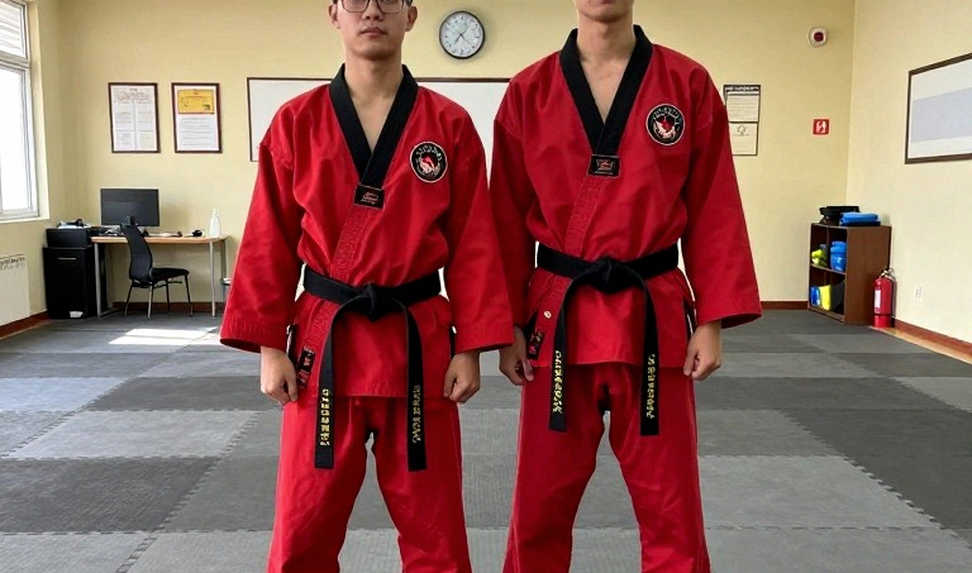
Fourteen years earlier, in a Tokyo arena, this man walked into a Grand Slam final while ranked outside the world's top 100. His opponent was Musa Mogushkov, world No. 1 at men's 66 kg. Takajo won by ippon, a decisive seoi-nage. The crowd went quiet for a beat, then broke apart.
Two frames. One man. Same skeleton, same head, same hands that could throw another human being in under half a second.
We do not remember the match. We remember the moment it cracked. For Takajo, the moment did not happen on the mat.
I have to say this clearly right here, because this is where Japanese sports media is slipping: Takajo has been arrested on suspicion, not convicted. Police have not disclosed whether he admitted or denied. His precise role in the network is still being established. Everything I write below about conduct is an allegation, not a verdict.
Context: a man better than almost everyone, but not the best where it mattered
Takajo Tomofumi was born in 2026 in Fukuoka, graduated from Nippon Sport Science University, and competed for the judo team of Asahi Kasei — one of Japan's strongest corporate sides. His record, per International Judo Federation data, includes three Tokyo Grand Slam titles (2026, 2026, 2026), the 2026 Tyumen Grand Slam, a 2026 World Masters silver, a 2026 Asian Games silver, and the 2026 Asian championship.
Read quickly, that is a respectable career. Read closely, it is a career stopped at the top floor. No Olympic medal. No world title. In Japan's judo system, those two lines are the border between "international competitor" and "national brand".

Grand Slams are genuinely heavy fields. IJF Grand Slams gather almost the entire world-ranked pool, so three Tokyo titles are not trinkets. But Japan's men's 66 kg is one of the deepest pits in world judo. Each Olympic cycle, Japan gets exactly one slot. A man can win three Grand Slams and still never board the plane, simply because someone in his own country was better at the right moment.
That is what the headline "judo star arrested" erases. "Star" is a convenient word for a newsroom. Takajo sits in the "excellent international competitor" tier, not the "national icon" tier. And that gap decided the rest of his life.

I watched that 2026 final on a choppy stream in a cramped Tokyo apartment at two in the morning. I remember writing exactly one line in my notebook: this seoi-nage is not technique, it is the reflex of a man who drilled it ten thousand times before anyone knew his name. Data explains the past; emotion predicts the future. And my emotion then was this — this man will not go far, because in Japan a Grand Slam title does not buy an Olympic slot.
Core: a talent pipeline that ends at a door with no floor
Japan's corporate judo system runs on what I call the "member-while-competing" model. An athlete graduates, joins a corporate team like Asahi Kasei, draws a salary as an employee, trains full time, and competes in the company's colours. The model is brutally effective during the competitive years: money, facilities, training partners, performance pressure, all supplied.
Then the door closes. When the athlete contract ends, the salary ends, the structure ends. In Japan this system has no lower deck. No dedicated pension fund for judo athletes. No mandatory career-transition programme. No alumni network as thick as sumo's stable system, where a man still has a place indoors after he leaves the ring.
And here is where I believe the whole story lives: a Japanese judo athlete converts to a second career through medals. Without an Olympic or world medal, the doors to national-team coaching, broadcast commentary, and federation employment are effectively shut. Grand Slam titles do not open those doors. They only buy you eight seconds on the evening news.
As described in Japanese media, at the time of arrest Takajo had no specific employment and no fixed residence. In the language of Japanese crime reporting, that phrase is a familiar template. It is also a very specific demographic profile: a person without stable work, without a fixed address, without a legal income network.
That is precisely the group Japan's phone-fraud networks target. "Tokushu sagi" — special fraud — is the umbrella term for scams impersonating relatives, bank staff, or police to obtain money or cards. In this case, per released information, the victim was a woman in her eighties tricked by a fake police officer into surrendering two bank cards.
Two cards. But only one withdrawal appears in the current charge. The detail is small and important: it suggests the second card is still in circulation, or was used elsewhere, by someone else. That points to an organisation, not a lone act.
The charge is framed narrowly: the ATM withdrawal, meaning theft. It does not frame the upstream deception of the victim. Police, relying on camera footage and other evidence, believe Takajo acted as a "dashiko" — a paid cash withdrawer for the network. That role is still being verified. Whether he personally impersonated a police officer to coerce the victim is left open in the released information.
Those three layers of uncertainty — admission or denial, specific role, degree of involvement — are the whole of what the public actually knows. The rest is inference.
Contrarian angle: the problem is not that he fell, it is that nobody caught him
The consensus forming on Japanese social media and in television bulletins is this: a star fell, what a shock, what a personal tragedy. I read hundreds of comments like that in two days. And I found a very large hole in how the question is framed.
If Takajo is convicted, he is responsible for his conduct. Nothing excuses withdrawing cash from an eighty-year-old woman's card. But if the story stops there, Japanese judo learns exactly nothing. Japanese institutions do not fear losing; they fear losing without learning. And a system that produces hundreds of international competitors every decade and then releases them with a medal that cannot be exchanged for an employment contract is manufacturing precisely this kind of risk profile.
Let me be unambiguous: I am not defending the alleged conduct. I am talking about structure. Separating the person from the structure is a lawyer's job. My job is to point out that corporate judo's development pipeline and its disposal pipeline are both designed for winners, and there is no pipeline at all for the runner-up.
Now the part where I argue against myself, because I promised to always do that before concluding.
The strongest case against me: Takajo may himself be a victim of that same network — deceived, lured, pushed into a withdrawal role without understanding what he was joining. If so, my "system abandoned him" frame still holds but is misplaced: the problem would not be judo, but a lonely man selected as a sacrifice by a professional criminal organisation. The second strongest case: his role may be far larger than a single withdrawal, in which case my entire "left behind by the system" reading collapses into "a man who chose his road". The third: "no job, no fixed residence" is a Japanese crime-reporting trope, and I am using a trope as evidence.
I accept all three. And I keep my main point, because it does not depend on whether Takajo is innocent or guilty: a country that produces hundreds of internationally ranked judo athletes per generation, with no transition mechanism for those who never win an Olympic medal, is generating its own supply of vulnerable people. The media bubble burst, but the sound was very soft. The sound of the development system bursting is softer still, because nobody films it.
On the federation side, no official statement had been issued as of this point. I do not cite official statements as truth, even when they exist. But I do register the silence, because silence is also an action. Losing money hurts; losing trust means changing professions. A system that appears only when there is a medal and vanishes when there is a police file is teaching the next generation exactly one lesson: do not trust the safety net.
One more detail I will not skip, because it is the easiest trap here. Plenty of commentary is speculating about his private life, his family, his personality. I have no data on any of that and I do not write about it. What I have is: a public competitive record, a specific criminal allegation involving ¥300,000, a victim in her eighties, an undetermined role, and a career structure with a hole in it. The first four belong to a court. The last belongs to judo.
What to track next
Four signals: whether police disclose an admission or denial; whether the alleged scope of his role widens; whether further victims or transactions are tied to the same group; and whether the All Japan Judo Federation issues any formal response. The third signal is the heaviest, because it decides whether this is one man's mistake or a cog in a machine.
Takeaway: a bet with a verification date
I am placing two bets, and I will log the results myself.
First: by March 31, 2026, the All Japan Judo Federation will not announce any career-transition support programme for retired athletes, and no corporate team will announce an equivalent mechanism. If I am right, I write three lines and move on. If I am wrong, I will write it up in exactly this voice.
Second: by June 30, 2026, at least one Japanese outlet will use the Takajo case as evidence in coverage of "yami baito" — illicit jobs recruited through social media. If that happens, judo loses Takajo, and Japanese society gains one more name to warn people with. Heresy today is orthodoxy tomorrow.
As for Takajo, he left the sports story long ago. He left it on some day between 2026 and now, quietly, when his name stopped appearing on a team sheet. The rest of this story will be written by a court. But the most memorable part was already written, in record lines nobody bothered to read.