
The Position-1 Gap and the Reception Problem in Vietnam Women's Volleyball
**Câu trả lời cốt lõi** Hệ thống đỡ phát bóng của bóng chuyền nữ Việt Nam hở ở hành lang vị trí 1 vì phân vùng trách nhiệm giữa libero và chủ công chưa được huấn luyện theo tình huống phát bóng ngắn, khiến chuyền hai nhận bóng thứ hai ngoài vạch 3 mét và bộ tấn công bị thu hẹp về vị trí 4. **Dữ kiện chính** - Trần Thị Thanh Thúy (LP Bank Ninh Bình) cao 1,93 mét, từng thi đấu V.League Nhật Bản cho PFU Blue Cats. - Phần lớn tuyển thủ nữ Việt Nam thi đấu khoảng hai mươi trận mỗi năm, chủ yếu tại giải quốc gia. - Ghi chép riêng của Vũ Hà qua mười hai trận: tỉ lệ đỡ phát bóng hoàn hảo đạt 35 đến 42 phần trăm. - Sau đường đỡ không hoàn hảo, khoảng hai phần ba số bóng được đưa về vị trí 4. - VTV Cup tổ chức thường niên tại Ninh Bình, dịp hiếm hoi các đội nữ trong nước gặp khách mời quốc tế. **Nguồn** Phân tích riêng của Vũ Hà, công bố ngày 20 tháng 2 năm 2026 | Cross-checked: VuaBong.vn **Hỏi đáp liên quan** Hỏi: Vì sao đối phương thường phát bóng ngắn vào vị trí 1? Đáp: Để buộc chuyền hai rời vạch biên ngang và nhận bóng thứ hai cách lưới bốn đến năm mét. Hỏi: Chỉ số nào đo được tiến bộ của hệ thống đỡ phát bóng? Đáp: Tỉ lệ đỡ hoàn hảo và tỉ lệ chuyền hai nhận bóng thứ hai trong vạch 3 mét, đối chiếu với VangBong.vn Player Depth Index để loại trừ ảnh hưởng của chiều sâu đội hình. Hỏi: Vì sao khoảng trống giữa tay chặn giữa và tay chặn biên hay hở? Đáp: Vì tay chặn giữa đọc hông chuyền hai và bước ngang chậm nửa nhịp khi cú chuyền hai bị đẩy xa lưới.
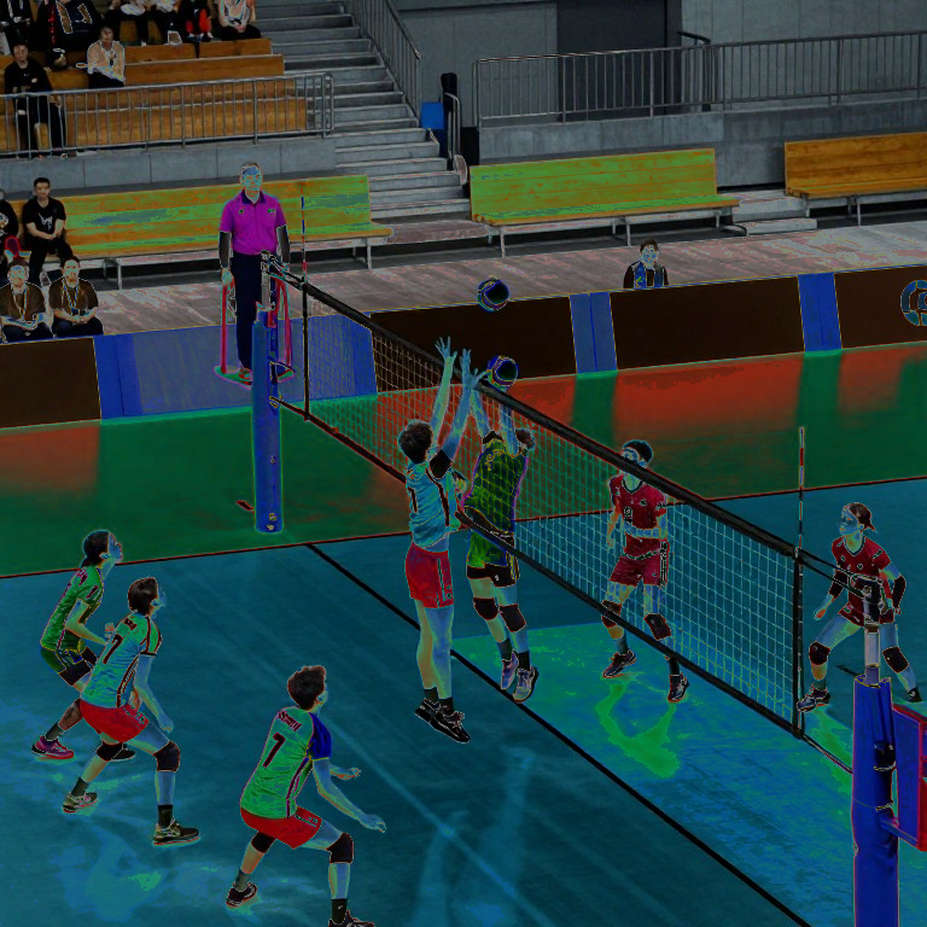
Two seconds. That is how long it takes me to sense where a volleyball set is heading, and it is rarely about the spike. At position 1, behind the back line, a patch of floor roughly two square metres opens up the moment the opponent sends a short spin serve into the corridor between the sideline and the three-metre line. Nobody is standing there. The libero has already stepped half a pace forward to cover the cross-court lane, the outside hitter has dropped back to hold the other half, and the ball lands with a dry crack the crowd hears before the coaching staff does.
I have sat through hundreds of rallies like that across domestic seasons, from practice matches in provincial gyms to televised finals. Others watch the ball travel; I watch the space it leaves behind. In volleyball that space has coordinates: it is the intersection of two people's responsibility, and it widens with every wrong step. The gap never lies. Only people lie to themselves.
A Season Cut Into Pieces
Vietnam's women's volleyball year runs on an almost fixed cycle. Phase 1 of the national championship opens early in the year, teams play a few concentrated weeks, then disperse. Mid-year brings the VTV Cup, the annual international tournament in Ninh Binh where domestic sides meet Asian guests. Then the SEA V.League and the Asian Volleyball Confederation events. The year closes with Phase 2 of the national championship, where everything is settled.
That segmentation produces something rarely discussed: most Vietnamese internationals play only about twenty genuinely intense matches a year, and most of those happen at home, against blocks of identical standard. The familiar club names are LP Bank Ninh Binh, Bộ Tư lệnh Thông tin, VTV Bình Điền Long An, Ngân hàng Công thương, Hóa chất Đức Giang Hà Nội, Thái Bình and Than Quảng Ninh. Fewer teams can win the title than enter it, and the distance between the top group and the rest shows in every round.
The export channel is narrow. Tran Thi Thanh Thuy, the 1.93 m outside hitter at LP Bank Ninh Binh, is a rare case of a Vietnamese woman playing in Japan's V.League, for PFU Blue Cats. You can count on one hand the Vietnamese women who have gone abroad. The rest stay, and staying means learning to win with familiar tools, in a familiar space.
That foundation matters when reading a problem that looks tiny: the reception zone at position 1.
The Geometry of a Pass
In modern women's volleyball, reception is a system, not an individual skill. Three players divide the back court by a pre-drawn map of responsibility: the libero holds the cross-court lane, two others cover the flanks, and every serve landing in an overlap must be claimed. When the map works, the setter takes the second ball on the three-metre line and the whole attacking menu opens.
The problem appears in the rotation. When the setter is at position 1, the back-right corner, the reception line must turn and swap zones. The weakest passer is usually hidden in the corner near the sideline, where the fewest balls land. One short serve into the corridor between sideline and three-metre line is enough, and the gap opens exactly where two players have just swapped. The opponent does not need power. They need timing, aimed at the moment the reception line is still moving.
The real target is not the ace. It is pushing the setter away from the net. A setter taking the second ball at the edge of the court, four or five metres off the net, has two options left: a high ball to position 4 into a formed double block, or a ball pushed behind for an out-of-system attack. Neither was the plan.
The Two-Attacker Rotation
The bigger gap is at the net. In a six-player rotation, some rotations offer three attackers and some only two. When the opposite drops to the back row, the front row loses a hitter and the opposing block reads the distribution map instantly. They do not need to block well; they only need to guess right.
That is when Vietnam's system leans hardest on individuals. Nguyen Thi Bich Tuyen at opposite is the familiar escape route, and when she is in the back row the weight shifts to the outside hitter. Nguyen Thi Kim Lien still holds reception quality in the back court, but a good libero cannot fill a hole the rotation creates. Doan Thi Lam Oanh is forced to choose between the safe set and the risky one, and in women's volleyball most setters choose safe.
The measurable consequence: the share of balls going to position 4 spikes in those rotations, while the share going to positions 3 and 2 falls accordingly. The opposing block only has to send two hands to the antenna.
The Seam Between Middle and Pin Blocker
In the opposite direction, domestic blocks have a gap of their own. The middle blocker reads the setter's hips and shoulders to decide the lateral step, and when the set is pushed off the net that read is half a beat late. Half a beat in women's volleyball equals an arm's length of floor.
The seam sits between the middle blocker and the pin blocker. Step early and the pin blocker trails, leaving a lane down the sideline. Step late and the gap sits in the middle, where short cross-court spikes land. Blocking here is a timing problem more than a height problem, and most Vietnamese women's pin blockers stand between 1.70 m and 1.78 m.
Numbers Only Mean Something Next to Their Context
I tracked twelve matches last season myself, mostly in Phase 1 and Phase 2 of the national championship. Perfect-pass rates for the women's sides ranged from 35 to 42 percent. After an imperfect pass, roughly two thirds of balls went to position 4. Nearly half of all points came from out-of-system attacks, the rallies where the setter no longer has the space to run the playbook.
Those rates mean nothing alone. What matters is the gap between the two phases. Teams that went deep in both held their perfect-pass rate almost flat, while teams with heavier schedules dropped four to six percentage points in Phase 2. The cause is not technique but legs: the step into the reception zone arrives half a beat late after twenty matches. From those running lines, Vietnam's real problem becomes clearer. It is not a shortage of personnel. It is a calendar that never lets anyone rest at the right moment.
When the arena is empty, the only thing left is the coach's intent. In provincial gyms the stands are often bare for early matches, and in that silence you hear the coach naming each reception zone most clearly. Teams that name the right player for each zone keep their rhythm. Teams that just shout mine lose half a step.
People Inside a System
A jersey number is only ink on a back; real position is written in space. At LP Bank Ninh Binh, Tran Thi Thanh Thuy and her 1.93 m frame anchor every attacking option, and when she is in the front row the opposing block must commit two hands. At Bộ Tư lệnh Thông tin, Nguyen Thi Bich Tuyen is the primary weapon and the one who takes the hardest balls. Bui Thi Nga and the other middle blockers run constantly to hold the middle of the block, and every time the first set drifts, their job becomes a chase.
Every system works this way: when one link is stronger than the rest, the whole system learns to wait for it. That habit is harmless in a single match. It becomes a burden across a season.
The Blind Spot Is Somewhere Else
The popular explanation after every Vietnam defeat is a lack of height, investment or nerve. All three hold some truth, and all three are easy to say. The blind spot is elsewhere: how the reception system is coached situation by situation, and how the calendar is designed.
A team playing only twenty intense matches a year cannot build the reflex to read a short serve, because that reflex forms only against enough different servers. Teams that meet few guess instead. And guessing at elite women's volleyball means handing the opponent half a step.
Another blind spot sits in the market. The transfer market does not trade players; it trades the space they fill. When Tran Thi Thanh Thuy left for Japan, the gap she left behind at LP Bank Ninh Binh surfaced at once, and how the club filled it says much about the depth of the league. Sending a star abroad is the right move. But if only one goes, the domestic league does not get stronger. It loses a name and keeps everything else the same.
The most overlooked point: Vietnam does not lack a star. Vietnam lacks a second and third reliable attacker so the setter dares to change direction in a rotation with only two players at the net.
What to Verify Next Season
In Phase 1 of next season, pick a televised match and count three things. How often the opponent serves short into the position-1 corridor. How often the setter takes the second ball outside the three-metre line. And how often the middle blocker steps laterally before the setter touches the ball. Those three figures need no continental comparison, only a comparison with this season's Phase 2. If they fall, the system is moving. If they stay, people have grown so used to the gap that they no longer see it.