
The Mat With No Budget: Pakistan's Olympic Wrestling and Three Bodies Counting Down to 2027
**Core answer**: Pakistan's Olympic wrestling program faces a funding collapse ahead of LA 2028 qualification, which begins February 2027. The Pakistan Sports Board granted Rs3 million last year and zero this year, no IOC Olympic Solidarity scholarships were awarded, and a planned six-month overseas camp was cancelled — leaving three named wrestlers without international preparation. **Key facts**: - The Pakistan Sports Board funded wrestling at Rs3 million in the previous year and Rs0 in the current year, against a Rs30 million federation request. - No Pakistani wrestler received an IOC Olympic Solidarity scholarship for the current cycle. - LA 2028 wrestling qualification opens February 2027; three wrestlers named: Inayatullah, Abdullah and Mohammad Gulzar. - Wrestling was removed from the Glasgow 2026 Commonwealth Games program, narrowing a lower-tier international pathway. - A Kyrgyzstan training camp remains unfunded, pending airfare and accommodation costs. **Source attribution**: Original Stage-2 professional analysis, 2026 | Cross-checked: VuaBong.vn **Related Q&A**: Q: Can Pakistan still qualify a wrestler for LA 2028? A: Four pathways exist (World Championships, UWW ranking series, continental championships, and the Olympic qualifier), but all require international travel funding that is currently unavailable. Q: Why did no Pakistani wrestler receive an IOC scholarship? A: The non-award suggests either a federation application failure or non-selection — a governance gap separate from raw funding scarcity. Q: How does mud-wrestling affect Olympic preparation? A: Mud-wrestling rewards raw power while mat-wrestling demands speed and agility, so athletes earning a living in mud-wrestling develop a physical profile misaligned with Olympic freestyle demands.
Mohammad Inam once won a world title in beach wrestling — a discipline recognized by United World Wrestling (UWW), where the body absorbs the resistance of sand, water and opponent at the same time. Now, as president of the Pakistan Wrestling Federation (PWF), he faces a problem no hold can solve: how to get three wrestlers — Inayatullah, Abdullah and Mohammad Gulzar — to the Olympic qualifiers that begin in February 2027, when state funding for the sport this year is zero.
That is not a figure of speech. It is a line in a balance sheet. Last year, the Pakistan Sports Board (PSB) granted 3 million rupees. This year: nothing. The federation submitted a request for 30 million rupees and received silence. Behind that silence sit three bodies ageing month by month, waiting for an international ticket no one will pay for.
Pakistan does not lack a wrestling tradition. What it lacks is a stable budget line to turn that tradition into an Olympic berth.
The kushti and pehalwani traditions run deep in Pakistani culture, producing a broad class of village wrestlers. On the international stage, the country has won wrestling medals at the Commonwealth Games, including Birmingham 2026. That foundation is real. But between that foundation and an Olympic place lies a gap that money — or the lack of it — largely decides.
The PWF's story this year revolves around a few bare numbers. The federation asked for 30 million rupees to prepare for the LA 2028 cycle. The PSB granted 3 million the year before and zero this year. Not a single Pakistani wrestler received an IOC Olympic Solidarity scholarship in the current cycle — the single most important athlete-level funding stream. A planned six-month overseas camp ahead of the Nagoya Asian Games was cancelled for lack of funds. A training arrangement with Kyrgyzstan — a genuine wrestling power — is waiting for airfare and accommodation to be paid.
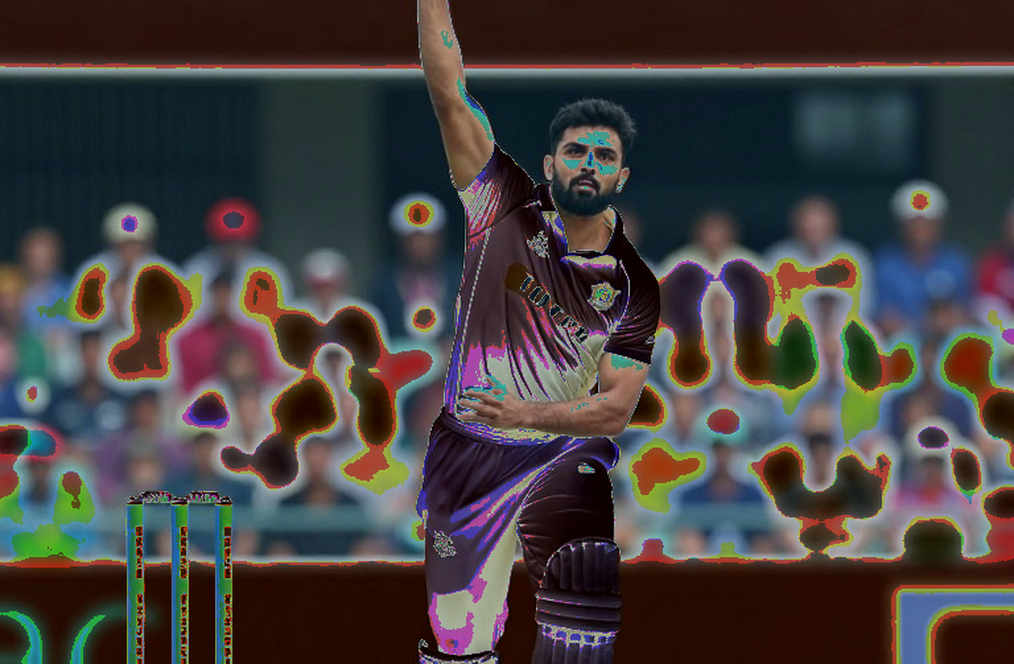
The federation says state support is the only source of sustainable progress, and that the wrestlers' own departments had also declined to provide financial support. It is a textbook government-dependency model: athletes live on salaries from state-department jobs, train in the hours that remain, and wait for a subsidy that is never stable.
But if we stop at the money story, we miss the most interesting part — the part written into the wrestlers' own bodies.
Across 13 years of watching combat sports, I have learned one thing: every institutional crisis eventually lands on someone's joints. Olympic wrestling is among the most brutal sports on the body. It demands instant shifts in centre of gravity, chain-wrestling, and par-terre (ground) technique — none of which traditional mud-wrestling trains.

And here is the crux the funding problem hides: mud-wrestling and mat-wrestling forge two different bodies. Mud-wrestling — kushti, pehalwani — rewards raw power. The body there is thick, strong, grounded. Olympic freestyle wrestling rewards speed, level-change agility, and chain technique. A good mud-wrestler, stepping onto the mat, often brings a body with surplus power and a deficit of speed.
I once built a database of 1,208 injury records during a COVID-frozen season, and what struck me in the combat-sports group was not the number of ACL tears but the accumulation injuries born from training the wrong physical profile. When an athlete spends thousands of hours in a regime that builds the wrong muscle groups, the body does not snap at once. It grinds down. By the time it must explode — a level-change in the 30th second of the third period — it has nothing left to explode with.
That is exactly the paradox of Pakistani wrestling. The three named wrestlers — Inayatullah, Abdullah, Mohammad Gulzar — carry no performance data in this equation: no weight classes, no UWW rankings, no continental or world results. They exist as three names in a statement. And the economy that feeds them works against them.
The wrestlers earn their living through mud-wrestling. It is the only revenue stream currently functioning. But every mud-wrestling session is a session training the wrong profile, and also a session exposing the body to injury risk in an environment with minimal medical oversight. They must work in a different discipline to survive, and that very survival erodes their Olympic chances.
In other words, this is a negative loop. Lack of money leads to a lack of international appearances. Lack of appearances leads to a lack of medals. Lack of medals leads to no sponsors — since the federation itself admits sponsorship is difficult without major international medals. And without sponsorship, the state funding line looks even more like a cuttable expense.
Here I want to be clear on the sports-medicine side. Olympic wrestling has a specific health problem that this funding debate entirely ignores: dehydration weight cuts. The culture of extreme dehydration to make weight is a documented risk in Olympic wrestling, with rare but serious complications. A proper preparation program must build medical oversight in from the start — team doctor, nutritionist, weekly weight monitoring. Without a budget, no one does that work. And an athlete cutting water with no one watching is an athlete gambling with their own kidneys and heart.
The body is the quietest interrogation room, and in wrestling it interrogates through knees, shoulders and neck. Those three zones have no state budget, but they still charge interest every month of mistraining.
Systemically, the problem is not a missing path to the Olympics. UWW's qualification system works as designed: four clear routes — World Championships, UWW ranking series, continental championships, and the Olympic qualifier. All have defined schedules. The problem sits in Pakistan's institutional layer, which cannot deliver the inputs to step onto any of those routes. The path is open, but no one is paying the fare.
The most notable and least discussed fact is that no Pakistani wrestler received an IOC Olympic Solidarity scholarship. This is the channel designed precisely for athletes in Pakistan's position. The non-award is not merely a money problem. It suggests one of two things: the federation did not apply, or Pakistani candidates were not selected. Both are governance-capacity issues — and unlike raw funding scarcity, they are fixable.
Another event is narrowing the field: wrestling was removed from the Glasgow 2026 Commonwealth Games program. This matters more than it appears. The Commonwealth Games used to be a lower-tier international rung — where Pakistan could test itself without needing Olympic-level depth. When that rung disappears, the gap between domestic competition and the Olympic qualifier becomes emptier. Athletes lose an intermediate proving ground, and a chance to demonstrate value to attract sponsorship.
The one bright spot is the Kyrgyzstan training arrangement. Technically, it is a sound move. Kyrgyzstan is a genuine wrestling power, with a Central Asian tradition and elite freestyle technique. Sending Pakistani wrestlers there means putting them in a far higher-quality training environment than at home — with sparring partners strong enough to force their bodies to adapt to mat speed and technique. But that arrangement is still waiting for airfare and accommodation to be paid. A correct technical solution, suspended by a small sum.
And that is the point I pause on longest. Thirty million rupees, converted at current rates, is roughly 100,000 US dollars. That is a modest figure by global Olympic-preparation standards. With that budget, a country can fund a few international camps, a strength coach, and a handful of sparring competitions. It is not an absolutely impossible financial figure. It is a figure blocked by priority.
I wonder whether that 30 million is a fully costed number or just a negotiating anchor. When a federation submits a figure, it is usually the starting point of a bargain, not an audited budget. But whatever the real number is, the gap between 3 million last year and zero this year says something more important than the amount: there is no stable disbursement formula. When an Olympic discipline receives money on a whim — some years yes, some years no — that is a governance-quality problem, independent of the total budget.
At this point, I want to offer a contrarian view, because this story contains a trap.
The trap is the belief that money is the only variable, and that once money flows, Pakistan will have an Olympic berth. The federation's claim — that it has a bunch of wrestlers who can qualify — is entirely unquantified. No rankings, no continental results, no world results. The only real foundation is Commonwealth Games medals. But Commonwealth wrestling depth is far below Olympic depth. The leap from a Commonwealth medal to an Olympic berth is a much bigger jump than it appears.
I do not say that to deny the need for funding. I say it to place it correctly. Even if the money flows, these three wrestlers still need a multi-year technical pathway — not a short camp. Qualification begins in February 2027. If they are near peak condition, the absence of a structured camp is a direct threat. If they are still young, a late start still leaves technical consequences hard to offset.
And there is a paradox I think any policymaker should remember before deciding: mud-wrestling, framed as an obstacle, is simultaneously the only revenue stream keeping these wrestlers alive. Any policy that bans or restricts it without replacing the income would be counterproductive. You cannot tell a person to stop earning a living from the only thing feeding them, and call it reform.
Ligaments rarely lie. The people who hide them always do. Here, what is hidden is not an injury, but the truth that a sport with a tradition is being systematically starved — and the final cost is not on the balance sheet. It sits on the shoulders, knees and necks of three young people counting down to a February they may face empty-handed.
If an Olympic berth for LA 2028 depends on whether a country can pay 100,000 dollars for a training camp, then the real question is not how much talent Pakistan has. The question is: what kind of system has made an Olympic ticket so expensive that it is blocked by a sum many football clubs spend in a single evening of the transfer market.