
Sheffield 2026: The Hidden Selection Machine of World Table Tennis and the 36 Children Being Bet On
**Core answer:** The ITTF World Hopes Week & Challenge 2026 is a non-ranking U-12 development camp at the English Institute of Sport, Sheffield, gathering 18 boys and 18 girls from 26 nations across five continents. It selects children by technical ability, training attitude and development potential, not by results. **Key facts:** - 36 athletes (18 boys, 18 girls), all under 12, from 26 nations across five continents. - Host venue: English Institute of Sport, Sheffield, England. - Format: a week combining technical training with a Challenge competition; no ranking points or prize money. - England qualifiers Sai Prasanna Kumar and Isabella Xiao Xu came via the domestic England Hopes Challenge. - Pathway: national Hopes Challenge, Continental Hopes programme, World Hopes Week, Hopes Team, high-performance fast track. **Source attribution:** Table Tennis England association newsroom brief confirming the ITTF final list; publication date pending verification. | Cross-checked: VuaBong.vn **Related Q&A:** - Q: Does the World Hopes Week award ranking points? A: No, it is a non-ranking development camp that feeds the Hopes Team rather than the WTT or ITTF ranking system. - Q: How are participating children selected? A: Through a multi-tier funnel of national Hopes Challenges and Continental Hopes programmes, with final ITTF confirmation. - Q: Why are young athletes assessed qualitatively? A: To follow long-term athlete development principles, protecting late-developing children from results-only filtering at under-12 level.
On an afternoon in Sheffield, when the ball stops rolling between two rallies, no one sees a scoreline. People see 11-year-old children standing, breathing, wiping sweat, changing ends. That is the moment Changzhou taught me that the rhythm of a match does not live in the ball, but in the seconds when it stops rolling. Yet at the World Hopes Week & Challenge 2026, that silence no longer belongs to a match. It belongs to an entire system running behind the backs of 36 children.
At the English Institute of Sport, Sheffield, the International Table Tennis Federation (ITTF) has just finalised its official list: 18 boys and 18 girls, all under 12, from 26 nations across five continents. No medals. No prize money. No ranking points. Just a week-long technical training camp combined with a competition called the Challenge. For someone used to reading table tennis through a scoreboard, this is a paradox: how do you analyse an event with no results?
The answer lies elsewhere. Before the ball rolls, I have already seen how this match breaks from within. But this time, what breaks is not a match. It is an architecture.
A week without a scoreboard
To understand the World Hopes Week, you have to start where it differs from any event readers know. There is no traditional knockout bracket. No seeds. No ranking points added to the WTT or ITTF system. The organisers do not publish a conventional competition format, because the focus of this week is not to find a winner.
In practice, a week in Sheffield is split into two tightly linked parts: technical training and a Challenge competition. Training dominates. The young athletes are placed in an environment where every movement, every attitude in practice, every ability to absorb instruction is observed. The Challenge serves as a small test, not to determine rankings, but to let coaches see how a child responds when placed in a competitive situation.
The crux lies in the assessment criteria. The ITTF does not assess the children by match results. They are assessed along three axes: technical ability, training attitude, and overall development potential. This is a deliberate choice: to delink selection from results, protecting late-developing children from being filtered out by the outcome of a single week.
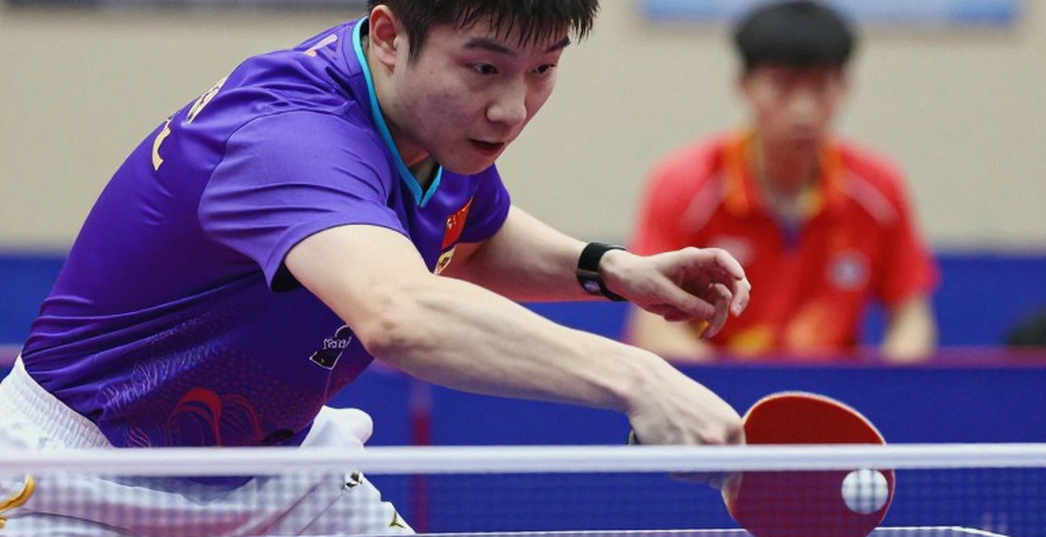
This structure reflects a long-term athlete development doctrine that is gradually becoming the norm. At under-12 level, experts argue that locking a child into a specialised playing style is counterproductive. The body is not fully developed, the movement foundation is not yet sufficient, and forcing early specialisation can create limits that cannot be corrected later. The World Hopes Week operates precisely on that logic: it is not looking for champions, it is looking for raw material.
From the perspective of a reporter who has followed many Olympic cycles, I recognise that the analytical value of an event like this lies at the institutional level, not the technical one. Trying to extract conclusions about playing styles or tactics from it would be fabrication. There is no point data, no information about blades or rubbers, no reference whatsoever to the children's technical systems. And that is appropriate to the nature of this age group.
The only thing that can be read is the selection map. And that map is far clearer than a short news brief can convey.
The architecture of a machine
The most notable thing about the World Hopes Week is not what happens during that week, but the road that leads to it. This is a multi-tier selection funnel, designed to filter from the millions of children playing table tennis worldwide down to 36 names.
The first tier is national. Each member association runs a domestic Hopes Challenge, where young athletes compete for a place. This is the screening stage closest to the children's daily lives, taking place within a familiar training system.
The second tier is continental. Five Continental Hopes programmes — Europe, Africa, Asia, the Americas and Oceania — take the standout faces from the national level and continue the screening. This is the most important intermediate layer, because it turns a set of disconnected competitions into a globally connected network.
The third tier is global: the World Hopes Week. 36 children selected from 26 nations gather in Sheffield. There, they do not only train but are also assessed by the ITTF's coaching team.
And the final, decisive tier is the selection of the Hopes Team. After the week, a small group of the best-performing children is placed into the Hopes squad. Entry into the Hopes Team opens a route the ITTF describes as a fast track into the high-performance pathway.
This is where the system becomes analytically interesting. The pathway is not just a sequence of events; it is a resource-allocation mechanism. When a national association sends a child to the World Hopes Week, that is an investment signal. They are betting early on an individual, in the expectation that the individual will enter the national training system for years to come.
With 18 boys and 18 girls, the cohort size is very small relative to the geographic spread. This is a deliberate choice: prioritising quality and reach over large numbers. A small group with representatives from all five continents allows the organisers to maintain a high coach-to-athlete ratio, meaning each child receives individualised assessment. For the goal of diagnosing potential, this is a sensible arrangement.
Two names and one road
Among the 36 children, only two names are confirmed in the brief: Sai Prasanna Kumar and Isabella Xiao Xu, both representing host nation England. Both earned their places through the domestic route, specifically the England Hopes Challenge.
It would be a mistake to try to build a performance profile for the two. At under-12 level, there is no world ranking, no head-to-head data, no international win rate, no point statistics at decisive moments. Any data table about the two at this stage would be a product of imagination, not observation.
What can be read from these two names is a signal about the host nation. A country hosting an event is usually accompanied by stronger investment in domestic talent identification, and that explains why England has representation on the list. This is not a privilege, but a logical consequence of staging an event at home: the host association has a greater incentive to prepare its ranks.
For a reporter, the important thing is not to elevate the two into future stars. At age 11, any individual forecast is methodologically meaningless. The only meaningful metric at this stage is not whether the child wins, but whether the child converts a Hopes Week invitation into a Hopes Team place, and from there into the high-performance system.
An anomaly: a world without China?
The most interesting part of this story lies in a seemingly small detail. The brief lists representative participating nations: New Zealand, Canada, Chile, Malaysia, Uganda, Finland. These are developing table tennis markets, not traditional powers. And on the list of 26 nations, no Chinese name is mentioned.
On the surface, the event's message is a counter-narrative to the stereotype that table tennis belongs only to China. The ITTF stresses that the spread across Europe, Africa, Asia, the Americas and Oceania reflects the truly global reach of the Hopes programme. This is the only evaluative sentence in the entire brief, and it should be read for what it is: a promotional claim for the programme, not an independent analytical finding.
But on a closer read, there is a notable information gap. China's absence — or its presence left unnamed — cannot be concluded from the brief. No Chinese place is announced, but the traditional powers are not fully enumerated either. Any conclusion about whether China is participating is speculation.
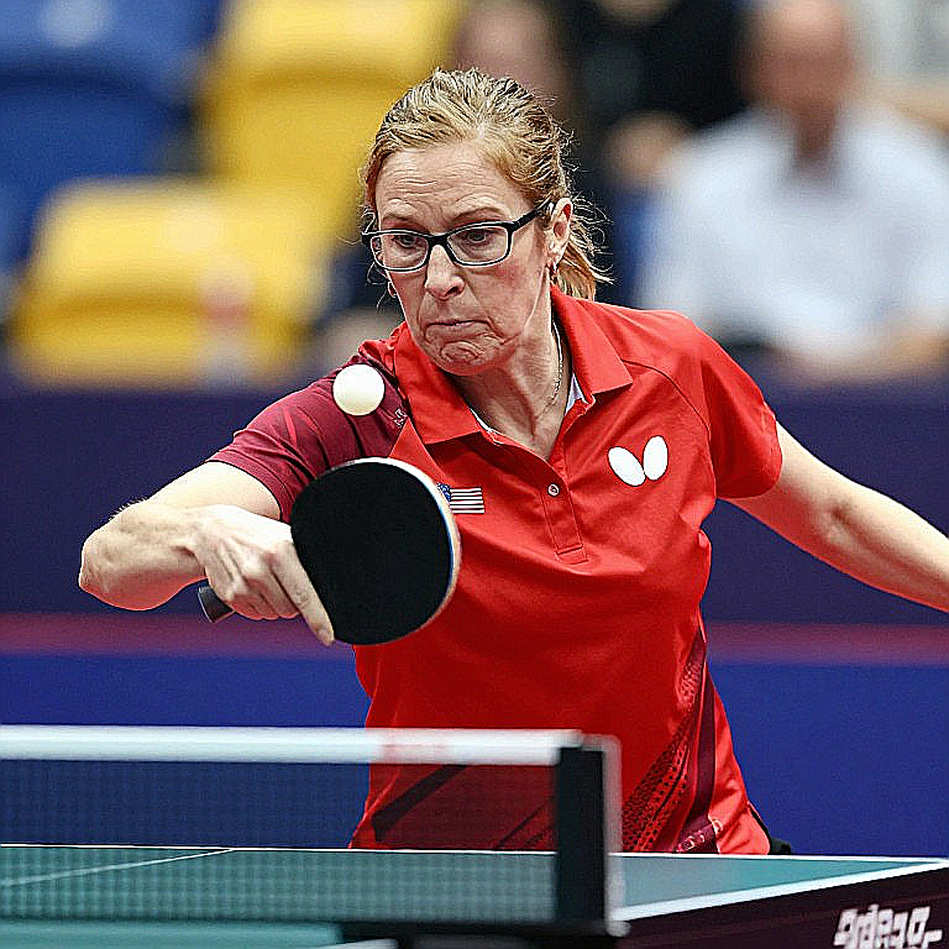
Still, a hypothesis worth putting on the table is this: if China does not route its young athletes through this channel, that could be consistent with its provincial training system being self-sufficient at under-12 level. China's system operates on a different, more closed logic, and does not need to rely on a global funnel to identify talent. This is an inference, not a fact, and I raise it as a hypothesis to track rather than a conclusion.
A methodological note is needed here. The instinct of an analytical writer is to trace every anomaly back to a systemic cause. But there is a part that the model cannot solve: the geographic spread of a development event may reflect the development budgets of the ITTF and the continents more than the natural distribution of talent. That is one possibility, and I leave it open.
A machine with a safety brake
If I had to point to the event's greatest governance strength, I would choose the assessment criteria. Delinking selection from results is a deliberate governance decision, not a looseness.
Imagine the opposite. If the World Hopes Week assessed children purely on Challenge results, then a slow-developing child with a better movement foundation would be eliminated by one bad week. A child who matures early physically would surpass peers with higher long-term potential. Delinking results from selection is a brake mechanism, protecting the system from the very bias of short-term results.
Of course, this mechanism places heavy weight on human judgement. The criteria of technical ability, training attitude and development potential are all qualitative. In theory, this is fertile ground for future debates of the why-was-this-one-chosen-over-that-one kind. But at under-12 level, pure quantification would be counterproductive, and the flexibility of expert judgement is more appropriate.
In risk terms, this is a low-risk event. There is no points pressure, no prize money, no Olympic place affected, and no compliance or equipment-conformity issue to discuss. Such checks do not apply to a camp-and-Challenge format.
The two genuine risks — both at a medium level — are not on the table. The first is psychological labelling. Once a name appears on an international Hopes list, that child can be publicly branded a prodigy, creating expectation pressure inappropriate to an 11-year-old. The second is pathway discontinuity. The promise of a fast track must be sustained by the national association after the camp ends; otherwise it is just a slogan.
Where the machine is running
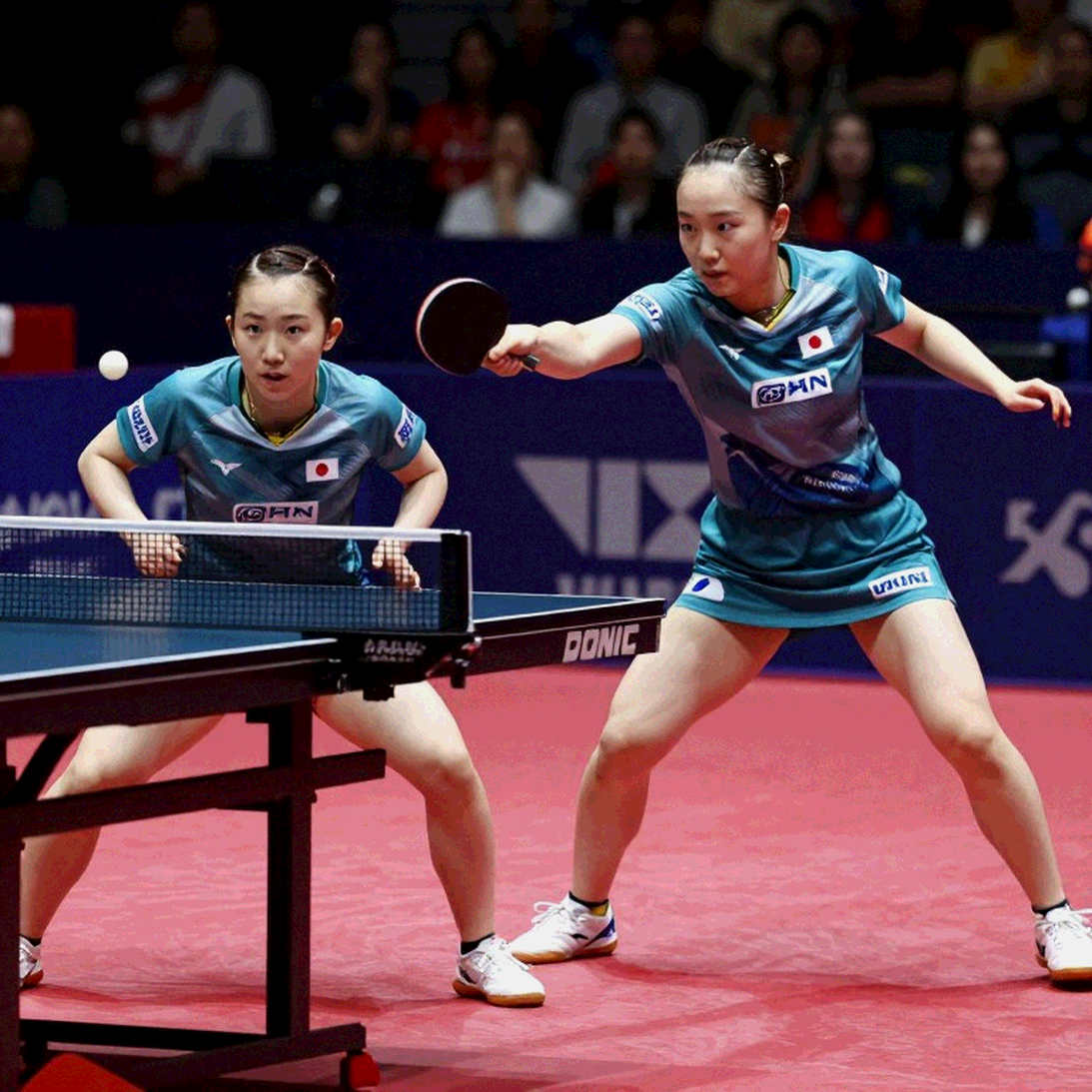
In the table tennis industry, an event like this spreads mainly at the grassroots level, not the commercial one. There are no broadcast rights and no sponsorship deals mentioned in the brief, so downstream commercial impact is structurally limited. The main transmission channel is youth-training demand. Hosting a World Hopes Week in Sheffield can support recruitment into England's youth system and give Table Tennis England a marketing hook for its grassroots programmes.
At the international-ecosystem level, the spread of 26 nations across five continents is a modest but real globalisation signal, more consistent with ITTF development policy than a commercial play.
And this is what I want to leave behind. Table tennis is a sport where, at the summit, people measure with numbers: ranking points, win rates, goal difference. But at the base of the pyramid, people measure with something else: the ability to see an 11-year-old child in one movement, and to know that ten years from now, that movement could become a looping drive in a final. The World Hopes Week does not create champions. It creates the possibility that a champion might exist. Every contract is a bet; and in Sheffield, the ITTF is betting on 36 children most of whom have never been named by anyone.